Table of Contents
n
- What Does This Career Do
- Key Terms & 2026 Industry Updates
- Electronic Health Record (EHR)
- SOAP Note
- 2026 Industry Update: AI-Assisted Scribing
- 2026 Industry Update: Telehealth Expansion
- 2026 Industry Update: Specialization Demand
- Is This Career Right for You?
- Requirements
- Licensing & State Variations
- Step-by-Step Guide
- Assess Your Foundation and Commit
- Research and Select Your Training Path
- Acquire Core Medical Knowledge
- Complete Formal Training and Certification
- Apply, Interview, and Secure Your First Position
- Time Required
- Salary & Job Outlook
- Salary by Practice Setting
- Career Progression & Specializations
- Advancement Within Medical Documentation
- Specialization Tracks
- Pros and Cons
- Pros
- Cons
- Official Resources & Further Reading
- Suggested Reading
- Frequently Asked Questions
- Do you need a degree to be a medical scribe?
- How long does it take to become a medical scribe?
- Is medical scribe certification required?
- What is the career path for a medical scribe?
- Related Careers
n
n
n
n
n
n
n
n
n
n
n
n
n
n
n
n
n
n
n
n
n
n
n
n
n
n
n
n
n
n
n
n
n
n
n
nn
What Does This Career Do
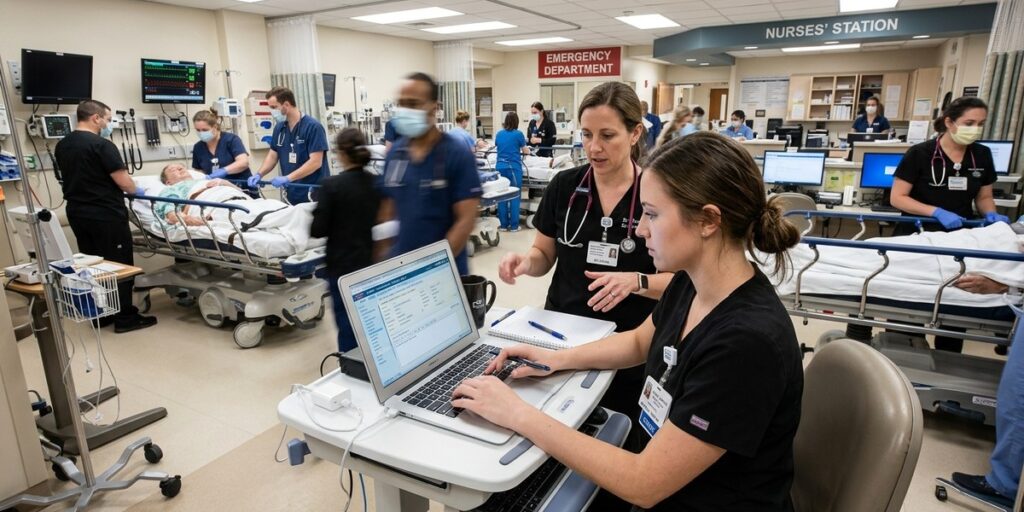
A medical scribe works directly alongside physicians, physician assistants, and nurse practitioners to handle the digital paperwork burden of modern medicine. Their core function is to be an extension of the provider, capturing the clinical encounter with precision so the clinician can maintain full focus on the patient.
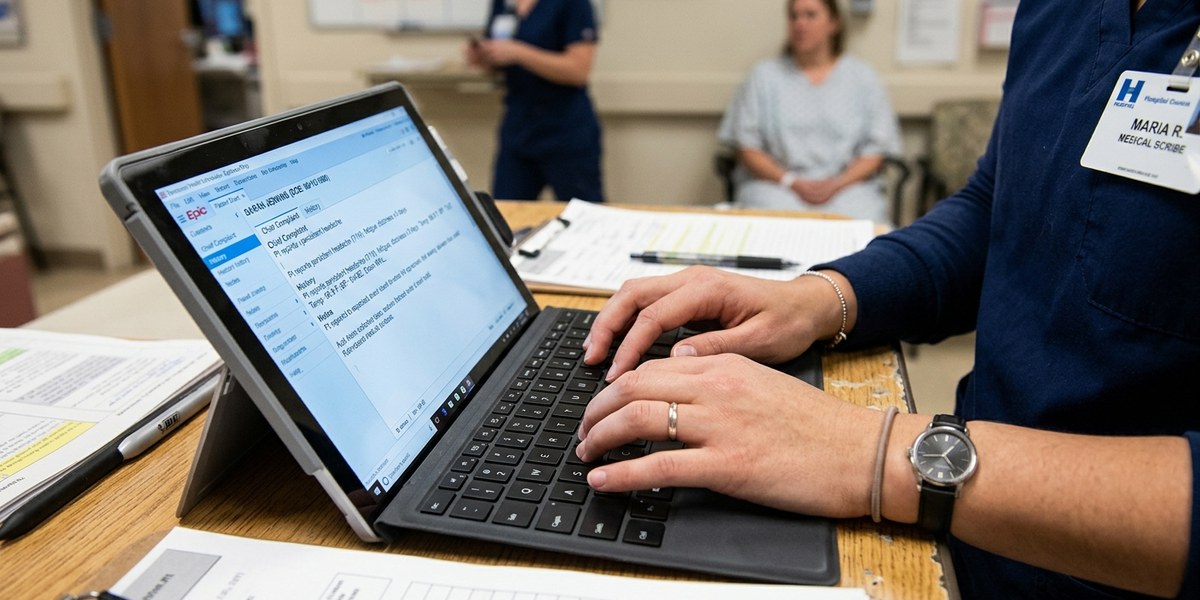
- Real-Time Clinical Documentation: The scribe listens to the patient-provider interaction and simultaneously inputs the history of present illness (HPI), review of systems, physical exam findings, assessment, and plan (SOAP note) directly into the Electronic Health Record (EHR).
- EHR Navigation and Data Management: They retrieve and review past medical records, lab results, and imaging reports to provide context. Scribes also assist with ordering tests, submitting prescriptions, and scheduling follow-up appointments within the EHR platform.
- Chart Accuracy and Compliance: They ensure documentation is complete, chronologically correct, and uses proper medical terminology to support accurate billing (coding) and meet stringent legal and insurance requirements.
- Workflow Support: By managing the digital chart, scribes help the provider move more efficiently between patients, reducing burnout and often allowing for more patient visits per day.
Key Terms & 2026 Industry Updates
Electronic Health Record (EHR)
The digital version of a patient’s paper chart, which is the primary platform for all scribe work. Mastery of specific systems like Epic, Cerner, or Athenahealth is a critical hard skill.
SOAP Note
The standard structure for clinical documentation: Subjective (patient’s symptoms), Objective (exam and test findings), Assessment (diagnosis), and Plan (treatment). Scribes must format notes precisely within this framework.
- CMSS (Certified Medical Scribe Specialist)
- A professional certification offered by the American College of Medical Scribe Specialists (ACMSS), often viewed as a gold-standard credential for candidates not trained through a major scribe company.
- Provider
- The healthcare professional (MD, DO, PA, NP) for whom the scribe works. The scribe-provider relationship is built on trust and seamless communication.
- Active Listening
- The essential soft skill of comprehending complex medical conversations at speed, filtering relevant clinical facts from casual dialogue, and accurately translating them into structured notes.
2026 Industry Update: AI-Assisted Scribing
The role is evolving with the integration of ambient AI listening tools. These technologies draft notes from conversation, but the human scribe’s role is shifting toward high-level editing, fact-checking, and ensuring clinical nuance and compliance are captured-making critical thinking skills more valuable than ever.
2026 Industry Update: Telehealth Expansion
Remote scribing positions have solidified as a permanent fixture. Scribes now commonly support providers via secure video platforms, documenting virtual visits from off-site locations, which expands job opportunities beyond major metropolitan hospitals.
2026 Industry Update: Specialization Demand
As EHRs become more complex, demand is rising for scribes with deep experience in specific specialties like orthopedics, cardiology, or oncology, where unique terminology, billing codes, and documentation protocols apply.
Is This Career Right for You?
This career is a powerful launchpad for future clinicians and a solid standalone role for those who thrive in fast-paced, detail-oriented support positions. It offers unparalleled front-row exposure to patient care and the healthcare system’s inner workings, but it requires a specific temperament and skill set.
Success depends less on prior clinical experience and more on your ability to learn quickly, handle stress, and become a reliable, invisible partner to a busy provider.
- You might be a great fit if you: Are a pre-med, pre-PA, or pre-nursing student seeking direct clinical experience; have exceptional typing speed and accuracy; enjoy learning complex systems (EHRs); possess stellar attention to detail; can remain calm and focused under time pressure; are a proficient “active listener” who can distill key information.
- Reconsider if you: Prefer a role with direct, hands-on patient care (like a medical assistant); struggle with multitasking in high-stress environments; have difficulty accepting feedback and making rapid corrections; seek a high-earning career path without additional education (advancement often requires further schooling); prefer independent, self-paced work over tightly integrated teamwork.
Note for Pre-Health Students: Medical school, PA school, and nursing program admissions committees highly value scribing experience. It demonstrates exposure to clinical reasoning, medical terminology, and the realities of patient care, making it one of the most impactful extracurricular activities for your application.
How to Become a Medical Scribe: Requirements
Formal barriers to entry are low, but employers have clear expectations for foundational knowledge and trainable skills. The requirements are designed to ensure you can be productive after a short, intensive training period.
- Education: A high school diploma or GED is the absolute minimum. Most employers strongly prefer or require some post-secondary education, such as college coursework in biology, anatomy, or health sciences. Being enrolled in or having completed a bachelor’s degree program (especially a pre-health track) is a significant advantage.
- Training & Certification: Completion of a formal medical scribe training program is a near-universal requirement. This is often provided directly by the employing company (e.g., ScribeAmerica, ProScribe) at no cost to you. Alternatively, you can pursue independent certification (e.g., the Certified Medical Scribe Specialist – CMSS) before applying.
- Exams & Assessments: Employer training culminates in a final exam testing medical terminology, pharmacology basics, HIPAA, billing/coding fundamentals, and specialty-specific protocols. Independent certification programs have their own proctored exams.
- Licensing: There is no state-mandated license to work as a medical scribe. Your authority to document in the EHR is granted under the direct supervision and credentials of the provider you work for.
- Core Competencies: A minimum typing speed of 60+ words per minute (WPM) with high accuracy is standard. You must pass a background check and drug screening. Proof of vaccinations (e.g., COVID-19, flu, Hepatitis B) is typically required for clinical site access.
Licensing & State Variations
Since medical scribes do not perform clinical procedures or make independent medical decisions, they are not subject to state professional licensing boards like nurses or physicians. Your legal scope of practice is defined entirely by the employing healthcare facility and the supervising provider.
However, key operational rules can vary by state and even by individual hospital policy, primarily concerning privacy and data access.
- HIPAA Compliance: Federal HIPAA law is universal, but state laws may add extra layers of patient privacy protection. Training will cover the specific regulations applicable in your state.
- EHR Access Credentials: While not a “license,” you will be granted unique login credentials for the EHR system. The level of access (e.g., ability to “sign” notes on behalf of the provider) is strictly controlled by the hospital’s IT and compliance departments and varies by institution.
- Supervision Requirements: Some hospital networks or states may have formal policies requiring the provider to physically review and electronically sign every note a scribe creates before it becomes part of the legal record, while others may allow co-signature workflows.
- Remote Work Regulations: If working as a remote scribe, you must typically be physically located in a state where your employer is registered to do business and has established compliant data security protocols. You cannot usually scribe for a provider in California while sitting in a different state unless the company has a specific interstate operational agreement.
Step-by-Step Guide
-
Assess Your Foundation and Commit
Before investing time or money, conduct an honest self-assessment against the core requirements. Test your typing speed using free online tools-aim for at least 60 WPM. Evaluate your comfort with fast-paced learning and high-pressure environments. If you lack basic biology or anatomy knowledge, consider taking a low-cost community college or reputable online course (e.g., through Coursera or edX) to build a foundation. This step is about ensuring you have the raw materials to succeed in the intensive training ahead.
-
Research and Select Your Training Path
You have two primary avenues: the Employer-Sponsored Path or the Independent Certification Path. The Employer-Sponsored Path (with companies like ScribeAmerica, Aquity Solutions, or ProScribe) is the most common. You apply first, and if hired, they train you for free, but you’re typically obligated to work for them for a set period. The Independent Path (pursuing a credential like the CMSS on your own) offers more flexibility and can make you a more attractive candidate, but requires an upfront investment of $500-$1,000. Research local job postings to see which credentials or company affiliations are most requested in your target market.
-
Acquire Core Medical Knowledge
Regardless of your chosen path, you must build fluency in medical language. Dedicate time to systematically learning medical terminology, basic anatomy, and common pharmacology prefixes/suffixes. Focus on the top 200-300 most common medical terms and abbreviations. Understand the SOAP note structure inside and out. Use flashcards, apps like “Medical Terminology” by TeachMeSeries, or textbooks from your local library. This foundational work will prevent you from being overwhelmed during formal training.
-
Complete Formal Training and Certification
Engage fully in your chosen training program. Employer-based training is often 4-6 weeks of combined virtual classroom instruction and hands-on practice with dummy EHR accounts. Independent certification courses are self-paced but cover similar material: advanced medical terminology, EHR navigation, HIPAA/compliance, specialty-specific documentation, and billing/coding basics. Treat this period like a full-time job. Success hinges on your participation, note-taking, and practice. The final exam is your gateway to credentialing or job placement.
-
Apply, Interview, and Secure Your First Position
With training complete, tailor your resume to highlight your certification, typing speed, medical knowledge, and soft skills like attention to detail. Apply to scribe positions through company portals, hospital career sites, or job boards. In interviews, be prepared to describe how you handle pressure, manage accuracy, and prioritize tasks. You may be given a short transcription test. For employer-sponsored trainees, this step is often part of the program. For independent candidates, be persistent; leverage any clinical networking you have, and consider applying for per-diem or part-time roles to get your foot in the door.
Time Required
The total timeline to become a job-ready, hired medical scribe typically ranges from 4 weeks to 6 months. The vast majority of this time is dedicated to training and the job search, not formal education. The fastest route is through a major scribe company’s accelerated training program, which can certify and place you in a role in about one month. The independent path, where you self-study and schedule your certification exam, usually takes 2-3 months of part-time effort.
The most time-intensive phase is the initial on-the-job period, often called “floor training” or “shadowing,” which lasts 2-6 weeks. Here, you work alongside an experienced scribe or trainer, applying your classroom knowledge to live, fast-paced patient encounters. It’s common to feel slow during this period; achieving full proficiency and comfort with a specific provider’s workflow and preferences generally takes an additional 1-3 months of independent work. Therefore, while you can be employed quickly, plan for a 3-6 month ramp-up to become a truly efficient and confident scribe.
Salary & Job Outlook
Compensation for medical scribes reflects the role’s status as an entry-level, high-learning clinical position. Earnings are influenced by geographic location, healthcare setting, employer type, and prior experience. The latest available BLS and industry survey data indicate a national median annual salary in the range of $38,000. The job market is exceptionally strong, with demand fueled by the universal adoption of electronic health records and the ongoing need to relieve physicians of administrative burdens.
| Metric | Snapshot |
|---|---|
| Median Annual Salary (U.S.) | Approximately $38,000 |
| Typical Hourly Range | $15 – $22 per hour |
| Job Outlook (Projection Period) | Much faster than average growth |
| Primary Demand Driver | EHR adoption & provider need for documentation efficiency |
| Entry-Level Experience Required | None typically; training provided |
It’s crucial to view scribe pay within the context of the role’s primary value: unparalleled, paid clinical experience. For pre-medical and pre-PA students, the salary supports living expenses while building a graduate school application that stands out. Hourly wages can be higher in high-cost metropolitan areas, emergency departments, and for specialties with complex documentation like orthopedics or cardiology. Overtime opportunities are common, and some large scribe companies offer modest shift differentials for nights and weekends.
Salary by Practice Setting
Your work environment significantly impacts both your paycheck and daily experience. Hospital-based roles often pay more but come with a faster, less predictable pace. Outpatient clinics may offer more regular hours and deeper relationships with a consistent provider team.
| Practice Setting | Starting Salary (Est.) | Work-Life Balance Notes |
|---|---|---|
| Hospital (Emergency Dept.) | $17 – $23/hr | Fast-paced, shift work (nights/weekends common), high acuity. |
| Specialty Outpatient Clinic | $16 – $21/hr | Predictable clinic hours, focused medical vocabulary, routine patient flow. |
| Primary Care / Family Medicine | $15 – $20/hr | Broad medical scope, longer-term patient relationships, typically standard business hours. |
| Telehealth / Virtual Scribing | $15 – $19/hr | Work-from-home potential, relies on audio/video feed, can involve odd hours across time zones. |
| Large Scribe Company (Multi-Site) | $15 – $18/hr | Structured training & career ladder, may require floating to different locations, benefits possible. |
Career Progression & Specializations
A medical scribe position is rarely an end goal but a powerful launchpad. The career path naturally branches into advanced clinical roles or deeper specialization within medical documentation itself. Your progression depends on whether you are using the role as a stepping stone to graduate school or building a career in healthcare operations.
Advancement Within Medical Documentation
Excelling as a scribe can lead to promotions that carry more responsibility and higher pay, often without requiring an additional degree.
- Lead Scribe / Chief Scribe
- Acts as a team supervisor at a specific site or region. Duties include scheduling, quality assurance of notes, training new scribes, and acting as the liaison between the scribe team and practice management. This role builds management experience.
- Scribe Trainer / Educator
- Moves into the classroom or virtual training environment to teach new cohorts of scribes. Requires exceptional communication skills and mastery of the training curriculum.
- Medical Documentation Specialist / EHR Analyst
- Evolves into a role focused on the integrity and optimization of the EHR system itself. This can involve auditing charts for compliance, helping design documentation templates, or training providers on new software features.
Specialization Tracks
Developing expertise in a particular medical field makes you highly valuable and can command premium pay. Specialization usually occurs through on-the-job assignment or seeking out positions in specific departments.
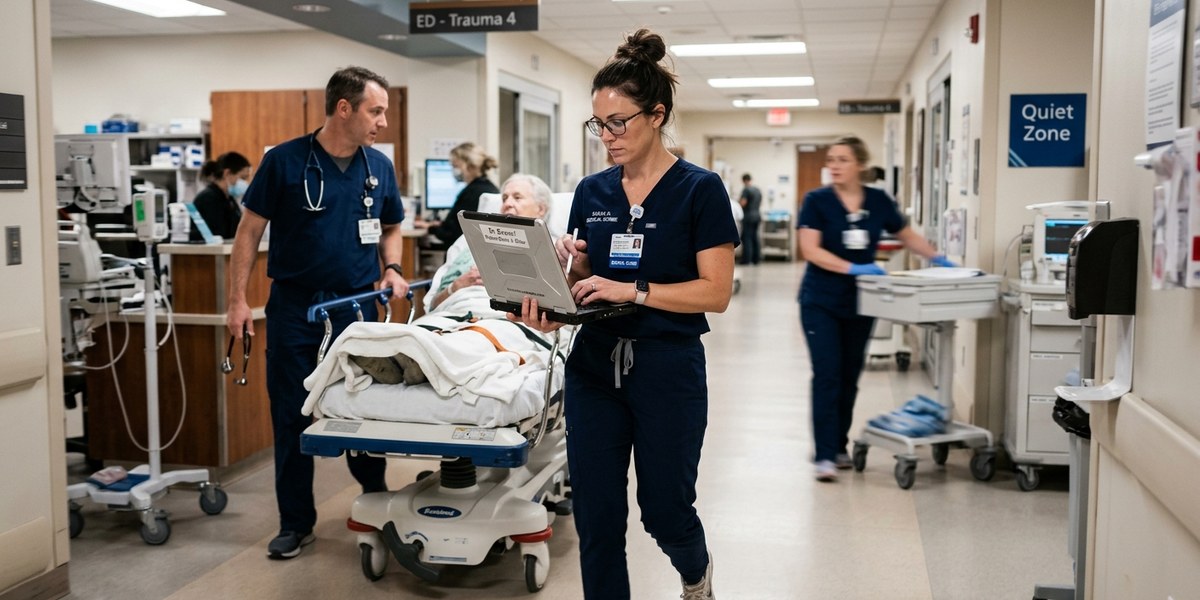
- Emergency Medicine Scribe: The most fast-paced track. You must master a vast array of acute care terminology, procedures, and the chaotic flow of an ED. Excellent for those seeking adrenaline and broad exposure.
- Surgical Scribe: Works in surgical clinics and sometimes in the operating room (documenting procedures). Requires precise knowledge of surgical anatomy, instruments, and pre-/post-operative care plans.
- Orthopedic / Cardiology Scribe: These specialties involve complex, specific vocabularies (e.g., implant names, EKG interpretations) and detailed procedural notes. Expertise here is a niche skill.
- Virtual/Telehealth Scribe: A growing field where you document for providers remotely via audio/video feed. Requires superb auditory processing and familiarity with telehealth platforms.
The most common progression, however, is out of scribing and into advanced clinical practice. A year or two of full-time scribing provides thousands of hours of direct patient encounter exposure, making an application to medical school, physician assistant programs, nursing programs, or medical school significantly stronger. Admissions committees view scribe experience as evidence of understanding the reality of clinical medicine, professionalism, and medical language fluency.
Pros and Cons
Weighing the advantages and challenges honestly is key to determining if this career path aligns with your temperament and goals. The role offers immense intangible benefits for the right person but presents real stressors.
Pros
- Unparalleled Clinical Exposure: You are a fly on the wall for countless patient-provider interactions, observing diagnostics, decision-making, and patient communication firsthand. This is the single biggest draw for future clinicians.
- Low Barrier to Entry: No bachelor’s degree or prior clinical experience is required. Training is typically provided and often paid, allowing you to start earning and learning quickly.
- Strong Stepping Stone: The experience is a gold standard for graduate health program applications. It demonstrates commitment, exposes you to the healthcare system, and builds a professional network.
- Skill Development: You will become fluent in medical language, proficient with major EHR systems, and adept at multitasking under pressure-all transferable skills within healthcare.
- Direct Impact on Patient Care: By handling documentation, you free up the provider to spend more time with patients, directly improving the efficiency and quality of care.
Cons
- Modest Compensation: Pay is entry-level for the healthcare sector. While sufficient for students, it can be challenging as a long-term, primary income, especially in high-cost areas.
- High-Pressure Environment: You must document accurately in real-time during fast-paced clinics or emergencies, dealing with complex terminology while managing the provider’s pace and style.
- Physical Demands: The job often involves long hours on your feet, moving between exam rooms, and can lead to eye strain and repetitive stress from typing.
- Emotional Toll: You will be exposed to serious illnesses, traumatic injuries, and difficult patient situations without the training or formal role to provide emotional support, which can be draining.
- Limited Long-Term Career Growth (within role): Advancement opportunities without pursuing further education are primarily into supervisory or training roles, which are limited in number.
Official Resources & Further Reading
To move from research to action, utilize these authoritative sources for certification details, job listings, and the latest industry standards.
- American College of Medical Scribe Specialists (ACMSS): The governing body for the Certified Medical Scribe Specialist (CMSS) and Advanced Certified Medical Scribe Specialist (ACMSS) credentials. Visit theacmss.org for exam outlines and approved training programs.
- U.S. Bureau of Labor Statistics – Occupational Outlook Handbook: For the most reliable government data on related occupations like Medical Transcriptionists and Health Information Technicians, which provide salary and outlook context, see bls.gov/ooh.
- O*NET Online: A detailed resource for skills, tasks, and work context for Medical Transcriptionists (a closely related SOC code). Explore at onetonline.org.
- Major Scribe Employer Sites: Check the careers pages of large scribe companies for their specific training requirements and open positions: ScribeAmerica, Aquity Solutions, and ProScribe.
- HealthIT.gov: For a deeper understanding of the Electronic Health Record (EHR) systems you will be using, this federal site offers resources on EHR adoption and meaningful use. Access at healthit.gov.
Suggested Reading
- For a broader perspective on launching a career in modern healthcare, our foundational guides on the CareerHowTo homepage provide essential context for roles like this one.
- Understanding the full landscape of clinical support positions can help you confirm that becoming a medical scribe is your optimal first step, which you can explore further from our main career resource hub.
- If you are weighing this path against other certified roles, reviewing the prerequisites and timelines for adjacent careers is a prudent next step after finishing this guide, all accessible from CareerHowTo.com.
Frequently Asked Questions
Do you need a degree to be a medical scribe?
No, a four-year degree is not required. Most positions require a high school diploma and completion of a specific training program, which may be provided by the employer. Many scribes are pre-health students gaining clinical experience.
How long does it take to become a medical scribe?
You can become job-ready in a few weeks to a few months. This typically involves completing an employer-based or independent certification course that covers medical terminology, EHR navigation, and documentation protocols. This process is the core of how to become a medical scribe.
Is medical scribe certification required?
Certification is not universally mandated by law, but many employers require or strongly prefer candidates who have completed a recognized scribe training program or hold a credential like the Certified Medical Scribe Specialist (CMSS).
How to Become a Medical Scribe: What is the career path for a medical scribe?
Scribing is often a stepping-stone role. Experience is highly valued for applications to medical school, physician assistant programs, nursing school, or other advanced clinical careers. Some scribes advance to lead scribe, trainer, or medical documentation specialist roles.
