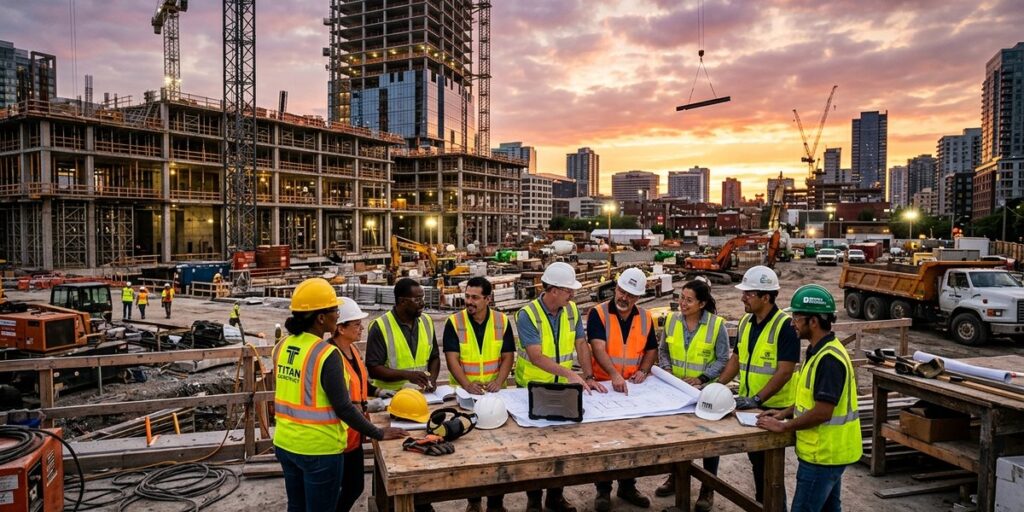
Learning how to become a project manager in construction is a strategic investment, typically requiring 8-10 years from education to a leadership role.
Table of Contents
n
- Who This Roadmap Is For (and Not For)
- The Big Picture: Stages From Zero to Job-Ready
- Time Investment: Realistic Ranges
- Cost Reality Check
- Phase-by-Phase Action Plan
- Phase 1: Secure Your Educational Foundation (Years 1-4)
- Phase 2: Grind in the Field (Years 5-8)
- Phase 3: Formalize Your Credentials (Overlapping Years 5-9)
- Phase 4: Step into Project Leadership (Years 9-13+)
- Key Terms & 2026 Industry Updates
- Essential Jargon You Must Know
- 2026 Forward-Looking Trends
- Licensing & State Variations (Compact)
- Salary & Job Outlook
- Salary by Practice Setting
- Getting Your First Role
- Career Progression & Specializations
- Vertical Advancement Path
- Specialization Tracks
- Pros, Cons, and When to Reconsider
- Pros
- Cons
- Official Resources & Further Reading
- Suggested Reading
- Frequently Asked Questions
- Do you need a degree to be a construction project manager?
- What is the most valuable certification for a construction PM?
- Can you become a construction project manager without working in the trades?
- What is the biggest challenge for a new construction project manager?
- Related Careers
- Related questions
n
n
n
n
n
n
n
n
n
n
n
n
n
n
n
n
n
n
n
n
n
n
n
n
n
n
n
n
n
n
n
n
nn
The primary financial hurdle is a bachelor’s degree, with an estimated cost of $40,000 to $120,000+, while the career bottleneck is gaining sufficient on-site field experience.
For your effort, the latest available BLS figures show a median annual wage of $108,210 for construction managers, with job growth projected about as fast as average.
Who This Roadmap Is For (and Not For)
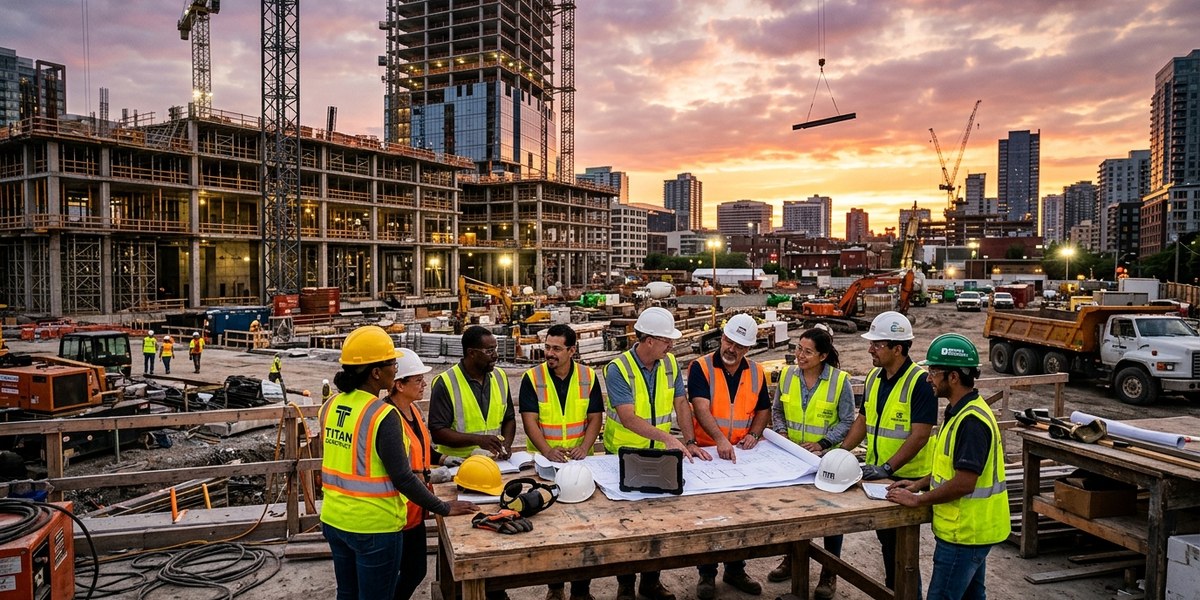
This roadmap is designed for career-starters, career-changers from adjacent fields (like engineering or architecture), and current construction professionals (e.g., tradespeople, coordinators) aiming for management.
It provides the structured, phase-based path most large general contractors and developers expect.
This guide is not for those seeking a purely office-based, theoretical project management career.
Construction project management demands a high tolerance for unpredictable site conditions, weather delays, and resolving physical problems under pressure.
If you prefer managing digital deliverables over coordinating concrete pours and electrical rough-ins, a general or IT project management path may be a better fit.
Similarly, if you are looking for a sub-2-year entry with minimal formal education, this is not the right career; the required knowledge of codes, methods, and safety protocols necessitates substantial upfront and ongoing investment.
The Big Picture: Stages From Zero to Job-Ready
The journey to become a construction project manager follows four distinct, cumulative phases. You cannot skip stages; each builds the necessary credibility and competence for the next.
- Education & Foundation (4 years): This non-negotiable stage involves earning a bachelor’s degree. It’s where you learn the language of construction-reading blueprints, understanding building codes, and grasping estimating principles. The critical parallel activity here is securing internships, which convert academic knowledge into practical insight and begin your professional network.
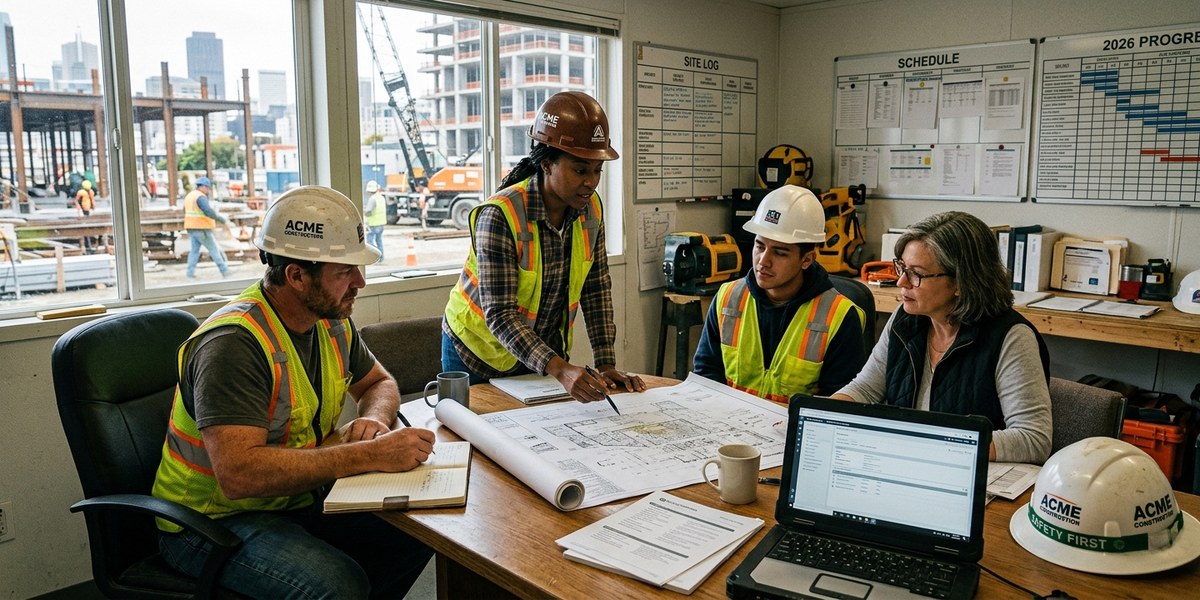
- Entry-Level Field Experience (2-4 years): After graduation, you enter the field, not the corner office. Roles like Field Engineer, Assistant Superintendent, or Project Coordinator are the proving grounds. Here, you learn how plans become reality, manage daily logs, and begin coordinating subcontractors. This phase is about earning the respect of the trades and understanding the gritty details of schedule and sequence.
- Skill & Certification Development (1-2 years): While gaining experience, you formally bolster your qualifications. This phase centers on obtaining key credentials like the OSHA 30-Hour safety certification and preparing for major professional certifications like the PMP or CCM. You also deepen skills in specialized software for scheduling, BIM, and cost control.
- Project Leadership & Advancement (3-5 years): With a certification in hand and solid field experience, you transition to managing entire projects. You’ll be responsible for budget, schedule, safety, and quality from groundbreaking to closeout. This phase involves strategic decision-making, intense client/stakeholder management, and setting the course for senior leadership or specialization.
Time Investment: Realistic Ranges
The timeline to become a project manager in construction is not a one-size-fits-all sprint; it’s a marathon with different paces based on your starting point and opportunities.
- Fast-Track Path (Approx. 6 Years)
- This accelerated route assumes a focused 4-year degree program with multiple, relevant internships or a co-op, followed by two years of intensive, high-responsibility field experience where you actively seek out certification. It requires exceptional networking, performance, and often, landing with a company that has a structured development program.
- Typical Path (8-10 Years)
- This is the most common trajectory. It includes the standard 4-year degree, followed by 4-6 years of progressive field and office experience, earning promotions from coordinator to assistant PM, and completing certifications during this period. This pace allows for steady skill accumulation and is the baseline most employers expect for a full project manager role.
- Conservative / Career-Change Path (12+ Years)
- This longer timeline accounts for part-time study, transitioning from an unrelated field, or a slower, more deliberate climb from the trades. It may involve starting as a craft worker, moving into a foreman role, then pursuing an associate or bachelor’s degree while working. The experience base is deep, but the formal educational component extends the timeline.
Timeline Reality Check: The “experience years” are not merely calendar time. They refer to quality years where you are actively involved in project controls, problem-solving, and coordination.
A year spent on a complex commercial build is often more valuable than two years on repetitive, small-scale projects.
Cost Reality Check
Beyond time, understanding the financial investment is crucial. The costs are front-loaded (education) but include ongoing professional expenses. Below is a breakdown of the major cost categories you will encounter on this path.
| Cost Category | Estimate & Notes |
|---|---|
| Bachelor’s Degree Tuition & Fees | $40,000 – $120,000+ estimate for a 4-year in-state or private university program. This is the single largest investment. |
| Certification Exam Fees & Prep | PMP exam fee is around $575 for members; study materials/courses add $300-$2,000. The CCM exam has similar costs. |
| OSHA 30-Hour Safety Certification | Approximately $200-$600 for the online or in-person course. This is often an employer-paid expense. |
| Professional Association Memberships | Annual dues for groups like CMAA or PMI: $200-$500. Crucial for networking and continuing education. |
| Continuing Education & Software | Ongoing costs for training, conferences, and specialized software licenses (e.g., Primavera P6, Bluebeam). Budget $500-$2,000+ annually. |
Phase-by-Phase Action Plan
-
Phase 1: Secure Your Educational Foundation (Years 1-4)
Enroll in an accredited bachelor’s program in Construction Management, Civil Engineering, or a closely related field. Your primary goal is to master blueprint reading, construction methods, cost estimating, and basic scheduling.
Simultaneously, you must complete at least one, but ideally two or three, internships with general contractors, developers, or specialty subcontractors. Treat each internship as a prolonged job interview.
-
Phase 2: Grind in the Field (Years 5-8)
Your first post-graduation role should be field-centric: Field Engineer, Assistant Superintendent, or Project Coordinator.
Your mission is to learn the rhythm of a job site-subcontractor coordination, material deliveries, safety protocols, and daily reporting. Volunteer for the tough assignments and build genuine relationships with foremen and tradespeople;
their respect is your currency.
-
Phase 3: Formalize Your Credentials (Overlapping Years 5-9)
While gaining experience, target key certifications. First, obtain your OSHA 30-Hour card-it’s often required for site access.
Then, based on your career direction, begin studying for either the Project Management Professional (PMP) or the Certified Construction Manager (CCM) exam.
Parallel to this, seek training in high-value software like BIM tools or advanced scheduling platforms.
-
Phase 4: Step into Project Leadership (Years 9-13+)
With certification and substantial field/coordination experience, actively seek responsibility for a sub-project or a small, full project lifecycle.
This is where you synthesize all prior skills: you own the budget, schedule, quality, and safety outcomes. Focus on transparent communication with stakeholders and meticulous risk documentation.
Key Terms & 2026 Industry Updates
Essential Jargon You Must Know
- Request for Information (RFI)
- A formal process to clarify ambiguities or request details on project plans and specs. Managing RFI flow is critical to preventing delays.
- Submittal
- Shop drawings, product data, and samples submitted by contractors for architect/engineer approval before installation. The submittal log is a key quality control document.
- Critical Path Method (CPM)
- The sequence of dependent activities that determines the shortest possible project duration. Delays on the critical path delay the entire project.
2026 Forward-Looking Trends
The industry is evolving rapidly. To be a competitive candidate, you must be conversant in these areas:
- Digital Twin & BIM Integration
- Building Information Modeling (BIM) is now standard, but the frontier is using these models to create a live “digital twin” of a project for lifecycle management, from construction through facilities operation. Familiarity with BIM coordination and data-rich models is becoming a baseline skill.
- Embodied Carbon Tracking
- Beyond operational energy efficiency, clients and codes are increasingly demanding tracking of the carbon footprint of construction materials themselves. Project managers will need to understand material selections and procurement strategies that reduce embodied carbon.
- Advanced Prefabrication & Modular Construction
- To combat labor shortages and improve quality/speed, more building components are being manufactured off-site. This shifts the PM’s role to intense logistics coordination and early, precise design lock-down.
- Drone & Reality Capture for Progress Verification
- Weekly drone flights and laser scans are replacing manual progress photos. PMs use this data for accurate progress billing, clash detection, and creating as-built records, requiring basic data literacy.
- Contractual Shift to Integrated Project Delivery (IPD)
- Traditional design-bid-build is being supplemented by collaborative models like IPD, where owner, designer, and builder share risk/reward. This demands stronger facilitation and financial transparency skills from the PM.
Licensing & State Variations (Compact)
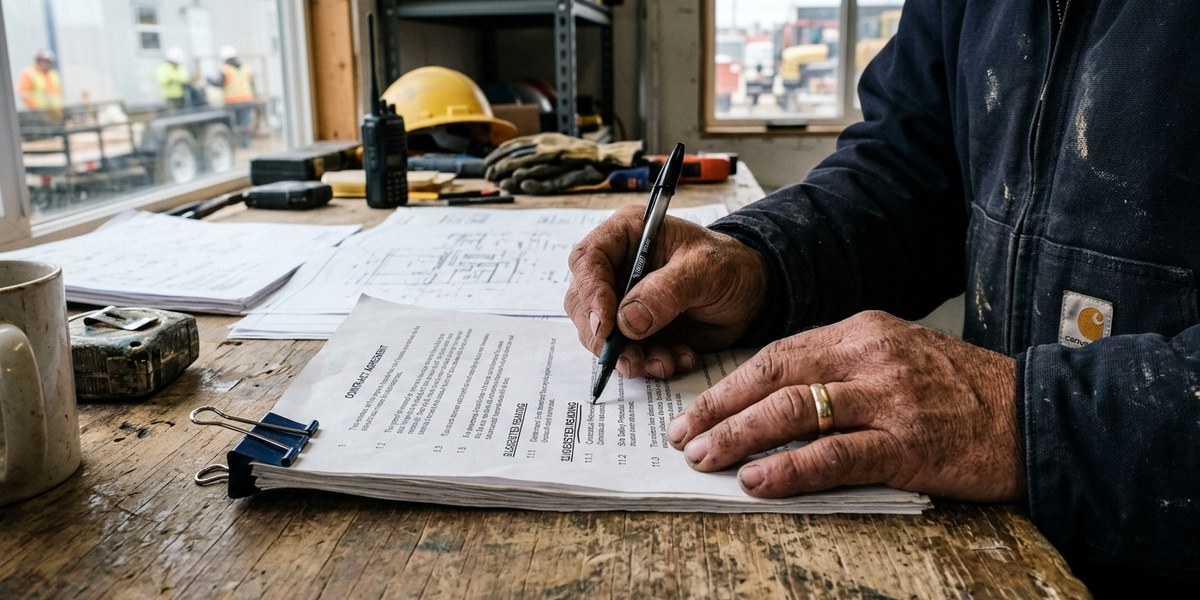
Unlike architects or professional engineers, construction project managers do not typically hold a state-issued professional license. Your authority comes from your employer and your professional certifications (PMP, CCM).
However, your projects are governed by the licensed professionals who seal the drawings and the licensed contractors who perform the work.
Key Regulatory Touchpoints:
- Contractor Licensing: The general contractor your firm employs (or your firm itself, if it holds the GC license) must be licensed in the project’s state. As a PM, you must ensure all contracted work is performed by properly licensed entities.
- Specialty Licenses: Electrical, plumbing, and HVAC work require specific trade licenses. Part of your coordination is verifying subcontractors’ licenses are current and in good standing.
- Certification vs. License: Do not confuse the voluntary, national certifications (PMP, CCM) with a state license. Some public or state-funded projects may require a CCM or similar certification for the PM role, but this is a project specification, not a law.
State-Specific Nuances: While no PM license exists, local building code jurisdictions vary widely. A PM in Florida must be deeply familiar with hurricane-resistant design codes, while one in California must understand seismic provisions.
Your continuing education should focus on the code cycles and environmental regulations (e.g., stormwater management) prevalent in your primary region of work.
Always check the specific requirements for public works projects in your state, as they often have additional training or certification mandates.
Salary & Job Outlook
Compensation for construction project managers reflects their critical role in delivering multi-million dollar projects. According to the latest available BLS figures, the median annual wage for construction managers is $108,210.
The top 10% of earners can make more than $169,000 annually, while entry-level positions typically start between $65,000 and $75,000. The job outlook is projected to grow about as fast as the average for all occupations, at a rate of 5%.
This steady demand is driven by ongoing needs for infrastructure repair, commercial development, and residential construction, though it can be sensitive to broader economic cycles.
| Experience Level | Typical Title | Salary Range (Est.) | Key Responsibilities |
|---|---|---|---|
| Entry-Level (0-3 yrs) | Project Coordinator, Field Engineer | $65,000 – $80,000 | Daily reporting, submittal processing, assisting with schedules and budgets. |
| Mid-Level (4-8 yrs) | Project Manager, Assistant PM | $85,000 – $120,000 | Managing sub-projects or smaller full projects, client communication, risk management. |
| Senior-Level (9+ yrs) | Senior PM, Project Executive | $120,000 – $160,000+ | Overseeing multiple projects or mega-projects, P&L responsibility, business development. |
Salary by Practice Setting
Your employer type significantly impacts your earning potential and daily work life. Heavy civil and industrial projects often command higher salaries due to complexity, while residential builders may offer faster paths to leadership.
| Practice Setting | Starting Salary (Est.) | Work-Life Balance Notes |
|---|---|---|
| Commercial General Contractor | $70,000 – $85,000 | Demanding; strict deadlines often lead to long hours during peak phases. |
| Heavy Civil/Infrastructure | $75,000 – $90,000 | Often unionized sites with more structured hours, but can involve remote project locations. |
| Residential Homebuilder | $65,000 – $78,000 | Faster project cycles; may involve managing multiple sites simultaneously in one geographic area. |
| Owner’s Representative/Developer | $80,000 – $95,000 | More office-based with client-side oversight; can offer more regular hours than GC roles. |
| Specialty Trade Subcontractor | $68,000 – $82,000 | Deep focus on one trade (e.g., electrical, mechanical); schedule is dependent on the general contractor’s timeline. |
Beyond base salary, comprehensive benefits and bonuses are a major part of total compensation. Expect potential bonuses tied to project profitability, safety records, and on-time completion, which can add 10-20% or more to your annual income.
A strong benefits package typically includes a company truck or vehicle allowance, health insurance, retirement contributions, and sometimes profit-sharing.
Getting Your First Role
Landing your first official role out of college requires a targeted strategy that leverages the foundation you built during internships. Your resume must bridge academic knowledge with practical application.
Focus your job search on titles like Field Engineer, Project Coordinator, or Assistant Superintendent. Tailor your resume’s bullet points to mirror the language of the job description, using action verbs like “coordinated,” “tracked,” “assisted in
managing,” and “documented.” Quantify your internship contributions wherever possible (e.g., “Supported the RFI process for a $15M commercial tenant improvement”).
Networking is not optional. Re-engage with every supervisor from your internships. Attend local chapters of the Construction Management Association of America (CMAA) or Associated General Contractors (AGC).
Many entry-level positions are filled through referrals before they are ever publicly posted.
Prepare for behavioral interview questions that probe your problem-solving and teamwork skills. Be ready with specific stories using the STAR method (Situation, Task, Action, Result).
Common questions include: “Describe a time you had a conflict with a coworker or subcontractor” and “Tell me about a time a project didn’t go to plan and what you did.”
Career Progression & Specializations
After 5-8 years of experience and earning a key certification, your career can branch into several high-value specializations or advance into executive leadership. Choosing a path allows you to deepen your expertise and increase your market value.
Vertical Advancement Path
- Project Manager: Manages single projects from conception to closeout.
- Senior Project Manager: Oversees larger, more complex projects or multiple smaller projects simultaneously.
- Project Executive / Director of Construction: Provides oversight for a portfolio of projects, manages other PMs, involved in high-level client relations and business strategy.
- Vice President of Operations / General Manager: Has P&L responsibility for a regional office or entire business unit.
Specialization Tracks
- Preconstruction & Estimating
- Focuses on the front end: conceptual estimating, value engineering, constructability reviews, and creating winning bid proposals. This path demands extreme attention to detail and mastery of software like Sage Estimating or Bluebeam.
- Project Controls / Scheduling
- Becomes the in-house expert on scheduling (Primavera P6), cost forecasting, and risk analysis. This role is crucial on large-scale projects like airports or hospitals to predict and mitigate delays and cost overruns.
- Virtual Design & Construction (VDC)
- Leads the integration of BIM, coordination models, and reality capture technology. This specialist ensures design intent is buildable and manages the flow of digital information between the office and the field.
- Sustainability / Green Building
- Specializes in projects targeting LEED, WELL, or other green certifications. Expertise includes material sourcing for embodied carbon reduction, energy modeling coordination, and ensuring documentation for certification.
- Owner’s Representation
- Works directly for the entity funding the project (e.g., a corporation, university, or government agency). Acts as the owner’s agent to manage the GC, control the budget, and protect the owner’s interests throughout construction.
An MBA or Master’s in Construction Management can accelerate the move into executive roles, particularly in developer or corporate owner organizations.
However, for most senior PM and project executive roles, a proven track record of delivering profitable, safe, and on-schedule projects is the most critical credential.
Pros, Cons, and When to Reconsider
This career offers tangible rewards but comes with significant pressures. It’s vital to weigh these factors against your personal temperament and life goals.
Pros
- High Earning Potential: Six-figure salaries are common, with additional bonuses and benefits like vehicle allowances significantly boosting total compensation.
- Tangible Results: You get to point to physical buildings and infrastructure you helped create-a lasting, visible legacy of your work.
- Dynamic, Non-Repetitive Work: No two days are the same; you constantly solve new puzzles involving logistics, people, and physics.
- Clear Career Pathway: The progression from field to leadership is well-defined, with certifications and experience providing clear milestones for advancement.
- Strong Demand: The essential nature of construction provides relative job security, and skilled managers are always needed to oversee complex projects.
- Leadership Development: You will develop exceptional skills in negotiation, crisis management, and team leadership that are transferable to many other industries.
Cons
- High Stress & Accountability: You bear ultimate responsibility for safety, budget, and schedule. A major mistake can cost hundreds of thousands of dollars or, worse, cause injury.
- Demanding Hours: Long days are standard, especially during critical project phases. Early mornings, late nights, and weekend work are common to meet deadlines.
- Job Site Conditions: You will spend significant time in trailers, dusty sites, and in all weather conditions, which can be physically taxing.
- Conflict-Rich Environment: You are the central node for resolving disputes between subcontractors, dealing with client changes, and managing design discrepancies.
- Economic Cyclicality: The construction industry is often the first to slow in a recession, leading to layoffs and hiring freezes during downturns.
- Continuous Learning Burden: Keeping up with evolving codes, software, sustainable practices, and contract law requires a commitment to lifelong learning.
When to Reconsider This Path: If you have a low tolerance for ambiguity and high-stakes decision-making, this career may be a poor fit.
Similarly, if you prioritize a strict 40-hour workweek and separation between work and home life, the relentless demands of a live construction project will be challenging.
It’s also not ideal for those who dislike being the central point of blame when things go wrong, as the project manager is ultimately accountable for most project failures.
Official Resources & Further Reading
Your professional development depends on leveraging authoritative resources. Bookmark these essential organizations and data sources.
- Project Management Institute (PMI): The home of the PMP certification. Access the PMP handbook, exam content outline, and find authorized training providers.
- Construction Management Association of America (CMAA): The leading authority for the CCM certification. Explore their CCM program and utilize their body of knowledge and networking events.
- U.S. Bureau of Labor Statistics (BLS): For the most authoritative salary and job outlook data, see the Occupational Outlook Handbook for Construction Managers.
- Occupational Safety and Health Administration (OSHA): Access free safety resources and find authorized trainers for your OSHA 30-Hour Construction certification.
- Associated General Contractors of America (AGC): A vital trade association offering training, model contracts, and advocacy. Check their certification and education offerings.
- O*NET Online: For a detailed breakdown of tasks, skills, and knowledge required, review the Construction Managers profile.
Suggested Reading
- For a deep dive into the core principles of construction management, explore the resources available on our main site, which covers fundamental project delivery methods.
- Understanding construction contracts and risk allocation is critical; find introductory guides to key contract clauses through our CareerHowTo platform.
- To navigate the financial aspects of the role, look for materials on construction accounting and cost control strategies featured on our homepage resource hub.
- Developing leadership skills specific to the construction environment is a continuous process, and further insights are regularly published on the CareerHowTo website.
Frequently Asked Questions
Do you need a degree to be a construction project manager?
While possible with extensive experience, most employers require a bachelor’s degree in construction management, civil engineering, or a related field for management roles.
How to Become a Project Manager In Construction: What is the most valuable certification for a construction PM?
The Project Management Professional (PMP) is widely recognized, but the Certified Construction Manager (CCM) is highly respected within the construction industry specifically.
Can you become a construction project manager without working in the trades?
Yes, a degree and project coordination experience are common paths. However, hands-on field experience is crucial for understanding build sequences and troubleshooting issues.
How to Become a Project Manager In Construction: What is the biggest challenge for a new construction project manager?
Managing risk and unforeseen delays, such as weather, material shortages, or subcontractor scheduling conflicts, while keeping the project on budget.
{
“@context”: “https://schema.org”,
“@graph”: [
{
“@type”: “HowTo”,
“name”: “5-Step Roadmap: How to Become a Construction Project Manager”,
“description”: “A clear 5-step roadmap on how to become a project manager in construction, detailing timeline, cost, education, and required certifications.”,
“totalTime”: “P8Y”,
“estimatedCost”: {
“@type”: “MonetaryAmount”,
“currency”: “USD”,
“value”: “45000”
},
“step”: [
{
“@type”: “HowToStep”,
“name”: “Phase 1: Secure Your Educational Foundation (Years 1-4)”,
“text”: “Enroll in an accredited bachelor’s program in Construction Management, Civil Engineering, or a closely related field. Your primary goal is to master blueprint reading, construction methods, cost estimating, and basic scheduling. Simultaneously, you must complete at least one, but ideally two or three, internships with general contractors, developers, or specialty subcontractors. Treat each internship as a prolonged job interview.”
},
{
“@type”: “HowToStep”,
“name”: “Phase 2: Grind in the Field (Years 5-8)”,
“text”: “Your first post-graduation role should be field-centric: Field Engineer, Assistant Superintendent, or Project Coordinator. Your mission is to learn the rhythm of a job site-subcontractor coordination, material deliveries, safety protocols, and daily reporting. Volunteer for the tough assignments and build genuine relationships with foremen and tradespeople; their respect is your currency.”
},
{
“@type”: “HowToStep”,
“name”: “Phase 3: Formalize Your Credentials (Overlapping Years 5-9)”,
“text”: “While gaining experience, target key certifications. First, obtain your OSHA 30-Hour card-it’s often required for site access. Then, based on your career direction, begin studying for either the Project Management Professional (PMP) or the Certified Construction Manager (CCM) exam. Parallel to this, seek training in high-value software like BIM tools or advanced scheduling platforms.”
},
{
“@type”: “HowToStep”,
“name”: “Phase 4: Step into Project Leadership (Years 9-13+)”,
“text”: “With certification and substantial field/coordination experience, actively seek responsibility for a sub-project or a small, full project lifecycle. This is where you synthesize all prior skills: you own the budget, schedule, quality, and safety outcomes. Focus on transparent communication with stakeholders and meticulous risk documentation.”
}
]
},
{
“@type”: “FAQPage”,
“mainEntity”: [
{
“@type”: “Question”,
“name”: “Do you need a degree to be a construction project manager?”,
“acceptedAnswer”: {
“@type”: “Answer”,
“text”: “While possible with extensive experience, most employers require a bachelor’s degree in construction management, civil engineering, or a related field for management roles.”
}
},
{
“@type”: “Question”,
“name”: “What is the most valuable certification for a construction PM?”,
“acceptedAnswer”: {
“@type”: “Answer”,
“text”: “The Project Management Professional (PMP) is widely recognized, but the Certified Construction Manager (CCM) is highly respected within the construction industry specifically.”
}
},
{
“@type”: “Question”,
“name”: “Can you become a construction project
