Becoming a general contractor typically takes 4–10 years, with total costs ranging from an estimated $2,000 (via a paid apprenticeship) to over $100,000 (with a bachelor’s degree).
The main bottleneck is accumulating the required field experience hours for your state licensing exam. The median annual salary for construction managers is $98,890 (BLS, 2025), though general contractors who own their business often earn more.

Roadmap at a Glance
| Dimension | Snapshot |
|---|---|
| Total timeline | Fastest 4 years; typical 6–8 years; conservative 10+ years |
| Total cost / financing (est.) | $2,000–$100,000+ (apprenticeship is lowest-cost; a bachelor’s degree is the highest) |
| Primary hurdle | Gaining 2–4 years of verifiable field experience before you can sit for the state licensing exam |
| Compensation snapshot | Median $98,890/year (BLS, 2025); top earners in commercial construction exceed $150,000 |
Who This Roadmap Is For (and Not For)
This guide is for anyone who wants to become a licensed general contractor and run their own construction business in the United States.
It is designed for career changers, trade school graduates, and college students exploring construction management.
It is not for someone who wants to work as an employee construction manager without holding a contractor license. It is also not for unlicensed handymen or remodelers who work on projects under the legal threshold for licensing in their state.
If you are looking for a path to work for a large construction firm as a salaried project manager, you may need a different roadmap focused on corporate advancement rather than business ownership.
The Big Picture: Stages From Zero to Job-Ready
The journey to becoming a general contractor follows five distinct phases. Each phase builds on the last, and skipping steps often leads to costly mistakes.
Phase 1: Foundation — You get the basic education and decide between a trade apprenticeship or a college degree. This takes 2–4 years.
Phase 2: Field Experience — You work under a licensed contractor, learning the trade and accumulating the hours required for licensing. This takes another 2–4 years.
Phase 3: Licensing and Business Setup — You pass the state exam, form your business entity, and get insured. This takes 6–12 months.
Phase 4: Portfolio Building — You complete your first few projects, gather reviews, and build a professional presence. This takes 1–2 years.
Phase 5: Scaling — You hire help, expand your project size, and build a referral pipeline. This is ongoing.
Time Investment: Realistic Ranges
The fastest realistic path to becoming a general contractor takes about 4 years. You would complete a 2-year trade apprenticeship, gain 2 years of field experience, pass the licensing exam, and start your own business.
The typical path takes 6–8 years. This includes earning a bachelor’s degree in construction management (4 years), working as an assistant project manager (2–3 years), then getting licensed and launching your firm.
The conservative path takes 10 years or more. You might work part-time while gaining experience, take the licensing exam after 5–7 years, and build a client base slowly while holding another job.
Your timeline depends heavily on your state’s experience requirements. Some states require 2 years of verified field experience; others require 4 years. Check your state licensing board before committing to a schedule.
Cost Reality Check
| Cost Category | Estimated Range |
|---|---|
| Trade apprenticeship or college tuition | Apprenticeships are often paid; a 2-year associate degree costs $5,000–$30,000; a 4-year bachelor’s $20,000–$100,000 |
| Licensing exam fees | $100–$500 per exam, plus study materials ($200–$1,000) |
| Business registration and permits | $200–$2,000 for LLC formation, business license, and local permits |
| Insurance and surety bond | General liability insurance $500–$3,000/year; surety bond 1–3% of bond amount |
| Tools and equipment | $2,000–$10,000 for basic power tools, ladders, and safety gear |
| Marketing and website | $500–$5,000 for professional website, business cards, and online ads |
These costs are estimates. The biggest variable is your education path. A paid apprenticeship can keep your total investment under $5,000, while a four-year degree plus business setup could exceed $100,000.
CareerHowTo Note: Many new general contractors underestimate ongoing costs like insurance renewals, bond premiums, and tool replacement. Build a cash reserve of at least $10,000 before taking your first project.
Phase-by-Phase Action Plan
-
Complete your foundation education. If you choose the trade route, apply for a paid apprenticeship through a local union or trade school. If you choose the college route, enroll in a construction management or civil engineering program.
Either way, earn your high school diploma or GED first.
-
Accumulate field experience under a licensed contractor. Work as a carpenter, laborer, or assistant project manager. Keep a detailed log of your hours and the types of work you perform. Most states require 2–4 years of verifiable experience.
-
Pass the state licensing exam and set up your business. Study for the exam using state-specific prep materials. Register your business as an LLC for liability protection. Obtain general liability insurance and a surety bond.
-
Build your first portfolio projects. Start with small remodels, decks, or additions. Focus on finishing on time and on budget. Collect photos and written testimonials from every client.
-
Scale your business sustainably. Hire a part-time project manager or administrative assistant once you have a steady pipeline. Join the National Association of Home Builders (NAHB) for networking and credibility.
Key Terms & 2026 Industry Updates
General Contractor (Prime Contractor)
The licensed business owner who holds the primary contract with the client, manages all subcontractors, and assumes full financial and legal responsibility for the project.
Unlike a construction manager who may be an employee, a general contractor is typically a business owner.
Surety Bond
A three-party guarantee that protects the client if the contractor fails to complete the project or pay subcontractors. Most states require a bond for licensing. The cost is typically 1–3% of the bond amount.
OSHA 30-Hour Construction Training
A safety certification that is increasingly required by states and general contractors for anyone working on job sites. In 2026, more states are moving to make this a prerequisite for licensing.
LEED Accreditation (2026 Update)
The U.S. Green Building Council’s Leadership in Energy and Environmental Design credential is becoming more valuable as states adopt stricter energy codes. General contractors with LEED accreditation can command higher rates on commercial projects.
Digital Permitting and Inspection Systems (2026 Trend)
Over 20 states now offer online permit submission and virtual inspections. This trend reduces delays but requires general contractors to be comfortable with digital document management and scheduling platforms.
- Change Order
- A formal amendment to the original contract that adjusts scope, budget, or timeline. Managing change orders effectively is a key skill for avoiding disputes and maintaining profit margins.
- Retainage
- A percentage (typically 5–10%) of each payment that the client holds back until the project is fully completed and all liens are released. New general contractors often forget to budget for this cash flow gap.
Licensing & State Variations (Compact)
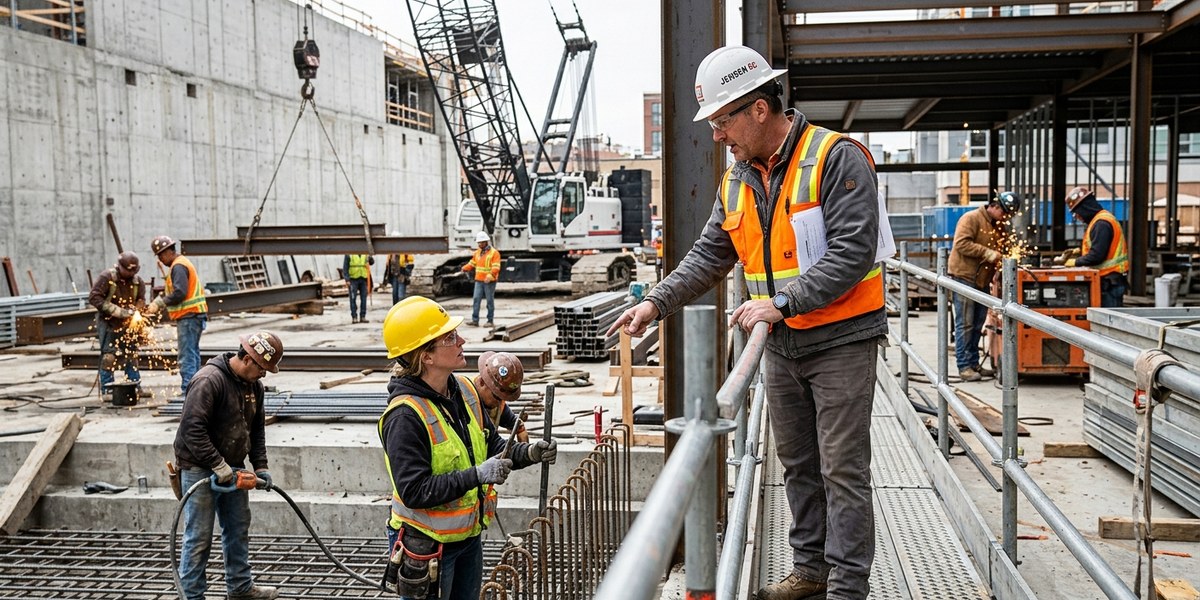
General contractor licensing is regulated at the state level, and requirements vary significantly.
Some states have no statewide license (e.g., Missouri, Vermont), while others require exams, experience, and financial statements (e.g., California, Florida, Texas).
Most states require you to be at least 18 years old, have a high school diploma or GED, and have 2–4 years of verifiable field experience. You will typically need to pass a trade exam and a business/law exam.
Some states have reciprocity agreements, meaning a license from one state is recognized in another. For example, the National Association of State Contractors Licensing Agencies (NASCLA) offers a standardized exam accepted in several states.
Always check with your state’s contractor licensing board before starting the process. Requirements change, and failing to meet a specific hour or education requirement can delay your application by months.
Salary & Job Outlook
The financial rewards of becoming a general contractor are significant, reflecting the high level of responsibility and skill the role demands.
According to the latest available Bureau of Labor Statistics (BLS) figures, the median annual salary for construction managers—a category that includes general contractors—is $98,890.
This compensation places the career well above the national median for all occupations.
Job growth in this field is robust. The BLS projects employment of construction managers will grow 8 percent from 2024 to 2034, which is much faster than the average for all occupations.
This demand is fueled by a steady need for new housing, infrastructure upgrades, and commercial space, as well as the increasing complexity of building codes and sustainability requirements.
Earnings vary based on experience, location, and the size of projects you manage.
General contractors who own their firms have the potential to earn significantly more than the median, especially as they build a reputation and take on larger commercial or custom residential builds.
| Metric | Value |
|---|---|
| Median Annual Salary | $98,890 (BLS, 2025) |
| Top 10% Earners | Over $170,000 |
| Job Growth (2024–2034) | 8% (Faster than average) |
| Typical Entry-Level Salary | $55,000 – $70,000 |
| Self-Employed / Business Owner Potential | Uncapped, depending on project volume and margins |
Salary by Practice Setting
Where you work as a general contractor greatly influences your starting pay and overall quality of life. The table below breaks down typical compensation and work-life balance across different practice settings.
| Practice Setting | Starting Salary (Est.) | Work-Life Balance |
|---|---|---|
| Residential Remodeling | $55,000 – $75,000 | Good; projects are smaller and often local, with more predictable hours. |
| New Home Construction | $65,000 – $85,000 | Moderate; deadlines are firm, but work is typically within a single subdivision. |
| Commercial Construction | $75,000 – $95,000 | Challenging; longer hours, night work, and travel between sites are common. |
| Industrial / Heavy Civil | $85,000 – $110,000 | Demanding; projects are large-scale, remote, and require strict safety protocols. |
| Self-Employed (Small Firm) | $40,000 – $80,000 (first 2 years) | Variable; you set your schedule, but client demands and administrative work can blur boundaries. |
Keep in mind that these figures are estimates and can vary widely by region.
Contractors in high-cost-of-living states like California, New York, and Massachusetts generally command higher rates, while those in the Midwest or rural areas may see lower starting salaries but also lower overhead costs.
Getting Your First Role
Your first role after becoming a licensed general contractor is often the most challenging to secure. You have the license and the knowledge, but you lack a portfolio of completed projects. The key is to start small and prove your reliability.
Many newly licensed contractors begin by working for an established firm as a project manager or assistant superintendent. This allows you to build a track record while earning a steady paycheck.
It also gives you exposure to the business side—estimating, bidding, and client management—under the guidance of a seasoned professional.
If you choose to go solo immediately, target small, low-risk projects such as bathroom remodels, deck builds, or garage conversions. These jobs require less capital and fewer subcontractors, reducing your financial exposure.
Offer competitive pricing and a clear timeline to win your first few bids.
Networking is critical at this stage. Attend local home builder association meetings, introduce yourself to real estate agents, and ask suppliers for referrals.
Your first clients will likely come from personal connections or word of mouth rather than online advertising.
Consider partnering with a more experienced contractor on a project. You can act as a subcontractor or co-contractor, sharing the risk while learning the ropes. This arrangement can fast-track your confidence and help you avoid costly mistakes.
Career Progression & Specializations
Once you have a few years of experience and a stable client base, you can begin to shape your career in a more intentional direction. General contractors have several paths for growth, each with its own rewards and challenges.
Residential General Contractor. This is the most common path. You focus on single-family homes, townhouses, and small multifamily projects. The work is varied—from new builds to major renovations—and the client relationships are personal.
Profit margins are typically 10–20% on residential projects.
Commercial General Contractor. Commercial projects include office buildings, retail spaces, restaurants, and medical facilities.
These projects are larger, require more complex bidding and scheduling, and often involve stricter safety and code requirements. Margins can be higher (15–25%), but the financial risk is also greater.
Industrial / Heavy Civil Contractor. This specialization involves large-scale infrastructure projects like bridges, highways, water treatment plants, and industrial facilities.
The work is highly regulated and requires specialized knowledge, but the compensation is among the highest in the field. Entry into this sector usually requires several years of commercial experience and additional certifications.
Design-Build Contractor. In this model, you offer both design and construction services under one contract. This approach streamlines the process for clients and can increase your profit margins by eliminating the architect as a middleman.
It requires a strong understanding of architectural principles and the ability to manage a design team.
Green / Sustainable Building Specialist. As energy codes tighten and client demand for eco-friendly homes grows, contractors with LEED accreditation or expertise in net-zero construction are in high demand.
This specialization can command premium rates and sets you apart from generalist competitors.
Career progression also includes scaling your business.
Many successful contractors eventually hire project managers, estimators, and administrative staff, allowing them to focus on high-level strategy and client acquisition rather than day-to-day site management.
Some contractors expand into real estate development, building homes or small commercial properties for their own portfolio.
Pros, Cons, and When to Reconsider
Becoming a general contractor is a rewarding career for the right person, but it is not without significant challenges. Understanding both sides will help you decide if this path aligns with your personality and goals.
Pros
- High earning potential. With a median salary near $100,000 and uncapped upside for business owners, this is one of the most financially rewarding careers without a four-year degree requirement.
- You are your own boss. As a licensed contractor, you control your schedule, your project choices, and your business direction. This autonomy is a major draw for many.
- Tangible results. You get to see the physical outcome of your work—a finished home, a remodeled kitchen, a new office building. The satisfaction of creating something real is hard to match in desk-based careers.
- Variety in daily work. No two days are the same. You move between job sites, meet with clients, solve unexpected problems, and coordinate teams. The work is dynamic and engaging.
- Strong job security. Construction is a fundamental industry that continues to grow. Even during economic downturns, there is demand for repairs, renovations, and essential infrastructure.
Cons
- High financial risk. You are responsible for project budgets, subcontractor payments, and insurance. A single miscalculation or dispute can wipe out your profit or even put you in debt.
- Stress and pressure. Deadlines are tight, clients can be demanding, and unexpected issues (weather, material delays, permit holdups) are constant. The stress level is high, especially when starting out.
- Physical demands. While you may not swing a hammer every day, you are on your feet, walking job sites, lifting materials, and working in all weather conditions. It is a physically active career.
- Unpredictable income. Especially in the first few years, income can be lumpy. You may have months with no projects followed by months of intense work. Cash flow management is a critical skill.
- Regulatory and legal complexity. Licensing, permits, inspections, contracts, and liens are part of daily life. A mistake in paperwork can lead to fines, lawsuits, or loss of license.
When to reconsider: If you prefer a predictable 9-to-5 schedule with a guaranteed paycheck, this career may not be for you. The financial instability of the early years can be stressful for those with family obligations or limited savings.
If you dislike confrontation or negotiation, client management will be a constant challenge.
Finally, if you are not comfortable with administrative tasks like bookkeeping, estimating, and contract writing, you will need to invest in training or hire help early on.
Official Resources & Further Reading
To succeed as a general contractor, you need reliable, up-to-date information. The following resources are essential for licensing, safety, and business management.
- Bureau of Labor Statistics (BLS) – Construction Managers. The official source for salary data, job outlook, and industry trends. Visit bls.gov/ooh/management/construction-managers.htm for the latest figures.
- National Association of Home Builders (NAHB). A membership organization that offers networking, education, and advocacy for residential contractors. Their website provides resources on business management and industry standards: nahb.org.
- Occupational Safety and Health Administration (OSHA). The 30-hour construction safety training is a critical credential. Find courses and compliance information at osha.gov.
- National Association of State Contractors Licensing Agencies (NASCLA). If you plan to work in multiple states, NASCLA offers a standardized exam that is accepted in several jurisdictions. More info at nascla.org.
- U.S. Small Business Administration (SBA). A comprehensive guide to starting a business, including licenses, permits, and financing. Visit sba.gov for templates and guidance.
Suggested Reading
- To understand the full timeline and cost breakdown for starting your own construction business, read our comprehensive guide on how to plan a career in construction management.
- If you are considering the trade apprenticeship route, our article on finding and applying for paid construction apprenticeships covers the application process and what to expect.
- For contractors looking to scale their business, learn about effective strategies for hiring subcontractors and managing project teams to avoid common pitfalls.
- New general contractors often struggle with cash flow; our resource on budgeting for insurance, bonds, and business startup costs provides practical templates and estimates.
- If you are weighing the pros and cons of residential versus commercial work, read our comparison of specializing in residential vs. commercial contracting to find the best fit for your skills.
Frequently Asked Questions
How long does it take to become a general contractor?
The fastest path takes about 4 years (apprenticeship plus licensing), while a typical route with a bachelor’s degree takes 6-8 years. Part-time paths can extend to 10 years or more.
Do I need a college degree to be a general contractor?
No, a degree is not mandatory. Many successful general contractors start as trade apprentices and gain field experience. However, a degree in construction management can accelerate career growth and help with licensing requirements.
What is the hardest part of becoming a general contractor?
The hardest part is often gaining enough field experience to qualify for the licensing exam while also learning business management skills like estimating, bidding, and client relations.
Many struggle with the financial risk of starting their own business.
How much does it cost to become a general contractor?
Costs vary widely. A trade apprenticeship may cost little to nothing, while a bachelor’s degree can exceed $100,000. Licensing, insurance, and business setup typically add $2,000-$10,000. Total investment ranges from $2,000 to over $100,000.
