
Learning how to be an electrician typically takes 4-5 years through a paid apprenticeship, with total costs estimated between $1,000 and $5,000 for tools, fees, and optional trade school.
Table of Contents
n
- Who This Roadmap Is For (and Not For)
- The Big Picture: Stages From Zero to Job-Ready
- Time Investment: Realistic Ranges
- Cost Reality Check
- Phase-by-Phase Action Plan
- Related Careers
- Related questions
n
n
n
n
n
n
n
n
nn
The primary bottleneck is passing the state journeyman licensing exam after accumulating 8,000 hours of on-the-job training.
Median pay for journeyman electricians is $60,040 per year (BLS, 2025), making this one of the highest-earning trades without a college degree.
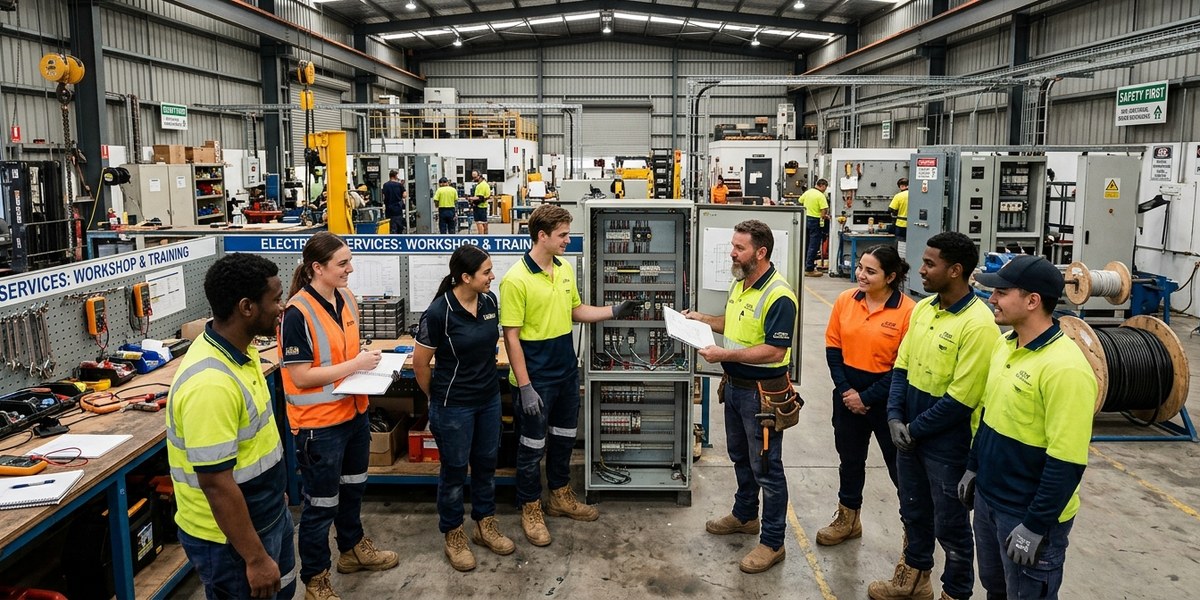
Who This Roadmap Is For (and Not For)
This guide is for high school graduates, career changers, and veterans who want a stable, hands-on career in electrical work without a four-year college degree.
It covers the standard path through apprenticeship to journeyman licensure in the United States.
This roadmap is not for you if you are seeking a purely online credential, want to become a master electrician (that requires additional years after journeyman status), or are looking at utility line work, which follows a separate training track.
It also does not cover electrical engineering degrees, which are academic rather than trade-based.
If you are already working as an apprentice or have some trade school credits, you can jump ahead to the phase that matches your current progress.
This roadmap is specifically designed for individuals who are committed to a hands-on, physically demanding career that requires working in a variety of environments, from residential attics and crawl spaces to commercial construction sites and
industrial facilities. If you prefer a desk job or are uncomfortable with heights, confined spaces, or working outdoors in extreme weather, this career may not be a good fit.
Additionally, this guide assumes you are legally eligible to work in the United States and can pass a drug screening, as most apprenticeship programs and employers require clean drug tests.
If you have a criminal record, particularly for theft or violent offenses, some states may deny or delay licensure, so it is important to check your state’s specific licensing board requirements early in the process.
Veterans transitioning from military service will find that many apprenticeship programs offer preferential admission and credit for relevant military experience, such as electrical or generator maintenance roles in the Navy or Army.
The Big Picture: Stages From Zero to Job-Ready
The journey from beginner to licensed journeyman electrician follows five distinct stages. First, you complete pre-apprenticeship education, typically high school or a short trade program.
Second, you apply and get accepted into a formal apprenticeship. Third, you work through 4-5 years of paid on-the-job training combined with classroom instruction. Fourth, you pass the state licensing exam.
Fifth, you receive your license and begin working as a journeyman.
Each stage has its own timeline, cost, and decision points. The entire process is sequential-you cannot skip the apprenticeship hours, and most states require proof of those hours before you can sit for the exam.
Key insight: The apprenticeship is the core of this career. Unlike many professions where you pay for training, electrician apprentices earn wages from day one, typically starting at 40-50% of journeyman pay and receiving raises every 1,000 hours.
Understanding the big picture also means recognizing that this career is not a straight line for everyone. Some apprentices switch employers mid-program, which can cause delays in hour accumulation if the new employer does not have immediate work.
Others find that their classroom schedule conflicts with work hours, requiring them to negotiate with their contractor or attend night classes. The key is to remain flexible and proactive.
If you encounter a setback, such as a layoff during an economic downturn, use that time to accelerate your classroom hours or study for the exam.
Many apprentices also use downtime to earn additional certifications, such as OSHA 30 or first aid/CPR, which make them more valuable to employers and can lead to faster wage progression.
The five stages are a framework, but your actual path will be shaped by your local job market, your personal circumstances, and your willingness to adapt.
Time Investment: Realistic Ranges
The fastest path to becoming an electrician takes about 4 years.
This assumes you enter a union or independent apprenticeship directly after high school, complete the required 8,000 on-the-job hours and 576 classroom hours without interruption, and pass the journeyman exam on your first attempt.
The typical timeline is 5 years. Most apprentices take the full 4-5 years to complete their hours, then spend an additional 1-3 months studying for and scheduling the licensing exam.
This is the most common experience reported by newly licensed electricians.
The conservative timeline stretches to 6-7 years. This happens when you attend trade school first (1-2 years), then complete a full apprenticeship, plus experience exam delays or retakes.
Trade school is optional but can make you a more competitive apprenticeship applicant.
It is important to note that the timeline can also be affected by personal circumstances. For example, if you need to work a second job during your apprenticeship to support your family, you may progress more slowly through the required hours.
Similarly, if you live in a rural area with fewer apprenticeship openings, you might face longer wait times for acceptance into a program.
Some apprentices also take breaks between phases for personal reasons, such as military service or family obligations, which can extend the overall timeline by a year or more.
Planning for these potential delays can help you set realistic expectations and avoid frustration.
Another factor that can stretch your timeline is the availability of work in your region.
In areas with strong construction markets, such as Texas, Florida, or the Pacific Northwest, apprentices often have no trouble accumulating hours quickly because contractors are eager for help.
However, in regions with seasonal construction cycles, such as the Midwest or Northeast, work may slow down during winter months, reducing your hourly accumulation to 30-35 hours per week instead of the standard 40.
This can add six months to a year to your total timeline.
Additionally, some apprentices choose to work overtime to accelerate their hour accumulation, but this is not always possible due to state regulations that limit apprentice work hours or contractor budget constraints. If you are determined to finish
as quickly as possible, consider relocating to a high-demand area for the duration of your apprenticeship, or look for programs that guarantee year-round work, such as those affiliated with large commercial or industrial contractors.
Cost Reality Check
| Expense Category | Estimated Cost |
|---|---|
| Trade school tuition (optional) | $0-$15,000 for 1-2 year program |
| Apprenticeship application fees | $50-$150 per program |
| Tools and equipment | $500-$1,500 initial investment |
| Classroom fees during apprenticeship | $500-$1,000 per year |
| Journeyman exam and license | $100-$500 total |
| Background check and drug test | $50-$150 |
Total out-of-pocket costs typically range from $1,000 to $5,000, not counting optional trade school. Most apprentices finance this through their apprenticeship wages, which start around $15-$20 per hour depending on location and union status.
Trade school can add significant cost but is not required for entry.
Beyond the direct costs listed above, there are additional financial considerations that aspiring electricians should plan for.
Transportation costs can add up, especially if your apprenticeship requires travel to multiple job sites across a metropolitan area. You may need a reliable vehicle and budget for gas, maintenance, and parking.
Work clothing and personal protective equipment (PPE) such as steel-toed boots, hard hats, and safety glasses are often your responsibility, costing $200-$500 initially.
If you join a union, you will also pay initiation fees and monthly dues, typically $200-$500 upfront and $20-$50 per month thereafter.
These costs are offset by higher wages and better benefits, but they are still important to factor into your budget.
Many apprentices also invest in study materials for the journeyman exam, such as code books, practice tests, and online prep courses, which can cost an additional $200-$600 during the final year of training.
It is also worth considering the opportunity cost of the apprenticeship itself. While you are earning wages, they are significantly lower than what a licensed journeyman makes.
Over the course of a 4-5 year apprenticeship, the difference between apprentice wages and journeyman wages can total $80,000 to $120,000 in foregone earnings.
This is not a direct out-of-pocket cost, but it is a real financial trade-off that you should factor into your decision.
However, unlike a college degree that requires four years of tuition payments with no income, an apprenticeship allows you to earn while you learn, which is why many career changers find it financially viable even with the lower starting wages.
To minimize the financial strain, create a budget before starting your apprenticeship that accounts for your reduced income, and consider living with family or roommates during the first two years when your wages are lowest.
Many apprentices also take advantage of employer tuition reimbursement programs for classroom fees, so ask about this benefit during your interview.
Phase-by-Phase Action Plan
-
Complete pre-apprenticeship education. Earn your high school diploma or GED, and take algebra and physics if possible. These subjects appear on the apprenticeship aptitude test.
You can apply directly to programs at age 18, or attend a trade school for 1-2 years to build skills and improve your application.
During this phase, you should also focus on building a strong foundation in basic electrical theory and safety practices. If you are still in high school, consider taking vocational courses in electronics or construction if they are available.
For career changers, community colleges often offer pre-apprenticeship programs that last 8-16 weeks and cover essential skills like blueprint reading, conduit bending, and electrical safety.
These programs can cost $500-$2,000 but may be eligible for financial aid or workforce development grants.
Additionally, volunteering with organizations like Habitat for Humanity can provide hands-on experience with basic wiring and demonstrate your commitment to the trade during apprenticeship interviews.
Keep a log of any relevant experience you gain, as it can strengthen your application and help you stand out from other candidates.
Another valuable step during this phase is to research the specific requirements of the apprenticeship programs you plan to apply to.
Some programs require a minimum score on the aptitude test, while others prioritize candidates with prior construction experience or a clean driving record.
If you have any gaps in your qualifications, such as a lack of algebra coursework, you can address them by taking a free online course or enrolling in a community college class.
Many programs also require a physical ability test, so it is wise to start a fitness routine that includes cardiovascular endurance, strength training, and flexibility exercises.
Electricians frequently lift heavy materials, climb ladders, and work in awkward positions, so being physically prepared will help you succeed in both the application process and the job itself.
Finally, consider attending an open house or information session at your local IBEW hall or independent contractor association to meet current apprentices and instructors, ask questions, and get a feel for the culture of the program.
-
Apply and enter an apprenticeship program. Submit applications to union and non-union programs, which typically require an aptitude test (basic algebra and reading comprehension) and an interview. Application fees run $50-$150 per program.
Acceptance rates vary, but persistence pays off-many applicants apply to 3-5 programs.
The application process itself can take several months, so it is wise to start early. Begin gathering your documents-high school transcripts, proof of age, and a valid driver’s license-well before application deadlines.
Many programs also require a physical exam and a drug test, so plan accordingly. During the interview, be prepared to discuss your motivation for entering the trade, your understanding of the physical demands, and your long-term career goals.
Practice common interview questions with a friend or family member, and dress professionally even though the work itself is blue-collar.
Some programs also require a hands-on assessment where you demonstrate basic tool familiarity, such as identifying common hand tools or performing a simple wiring task. If you are not accepted on your first attempt, do not be discouraged.
Use the feedback to improve your application, and reapply in the next cycle. Many successful electricians applied two or three times before being accepted.
To maximize your chances of acceptance, tailor each application to the specific program. For union programs, emphasize your willingness to learn the trade through structured training and your commitment to safety.
For independent programs, highlight any prior construction experience, your reliability, and your ability to work independently.
Some programs also offer pre-apprenticeship programs that provide a direct pipeline to full apprenticeship slots, so inquire about these options. Additionally, consider applying to programs in neighboring states if your local market is saturated.
Some states have reciprocity agreements that allow you to transfer your apprenticeship hours if you move, though this can be complicated.
If you are a veteran, be sure to mention your military service and any relevant technical training, as many programs have dedicated slots for veterans and may offer credit for prior experience.
Finally, follow up on your applications with a phone call or email to express your continued interest and to ask about the timeline for decisions.
-
Complete apprenticeship training. Over 4-5 years, you will work 8,000 hours under a licensed electrician while attending 576 hours of related classroom instruction.
You earn wages that increase every 1,000 hours, typically reaching 80-90% of journeyman pay by your final year. Your employer or union covers most classroom costs.
During your apprenticeship, you will rotate through different types of work to gain broad experience. In your first year, you will focus on basic tasks like measuring, cutting, and bending conduit, pulling wire, and installing boxes and fittings.
By your second and third years, you will move on to more complex tasks such as wiring panels, troubleshooting circuits, and installing lighting systems.
In your final years, you will take on leadership roles, such as mentoring new apprentices and managing small projects under supervision.
Keep a detailed log of all the hours you work and the types of tasks you perform, as this documentation will be required when you apply for the journeyman exam.
Your classroom instruction will cover electrical theory, code requirements, blueprint reading, and safety practices.
Attend every class session and participate actively, as the knowledge you gain directly applies to both your daily work and the licensing exam.
Building strong relationships with your journeyman mentors is also crucial-they can provide references, recommend you for specialized training, and help you navigate the transition to journeyman status.
One of the most important skills to develop during your apprenticeship is troubleshooting. Electrical systems are complex, and being able to diagnose and fix problems quickly is what separates average electricians from exceptional ones.
Pay close attention when your journeyman walks you through a troubleshooting process, and ask questions about why they chose a particular approach. Practice on your own time by studying wiring diagrams and simulating common faults.
Many apprentices also benefit from keeping a notebook where they document every problem they encounter and how it was resolved. This becomes a valuable reference for the journeyman exam and for your early years as a licensed electrician.
Additionally, take advantage of any specialized training opportunities that arise, such as workshops on motor controls, programmable logic controllers (PLCs), or renewable energy systems.
These skills are in high demand and can lead to higher pay and more interesting work after licensure. Finally, maintain a positive attitude even when the work is repetitive or physically demanding.
Your reputation among contractors and fellow electricians will follow you throughout your career, and being known as a reliable, hardworking apprentice can lead to job offers and recommendations when you become a journeyman.
-
Pass the journeyman licensing exam. After completing your apprenticeship hours, you register for the state-specific exam. Most states require both a written test (covering NEC, theory, and local codes) and a practical demonstration.
Study materials and prep courses cost $100-$
For official wage and employment data on careers in the United States, see the Bureau of Labor Statistics Occupational Outlook Handbook.
