Learning how to become a construction inspector typically takes 2 to 4 years, combining an associate degree with on-the-job training. Total education and certification costs range from $5,000 to $20,000, depending on the program and exam fees.
The primary hurdle is earning International Code Council (ICC) certification, which requires passing rigorous exams. Most construction inspectors earn a median salary of $67,700 per year, according to the latest available BLS figures.
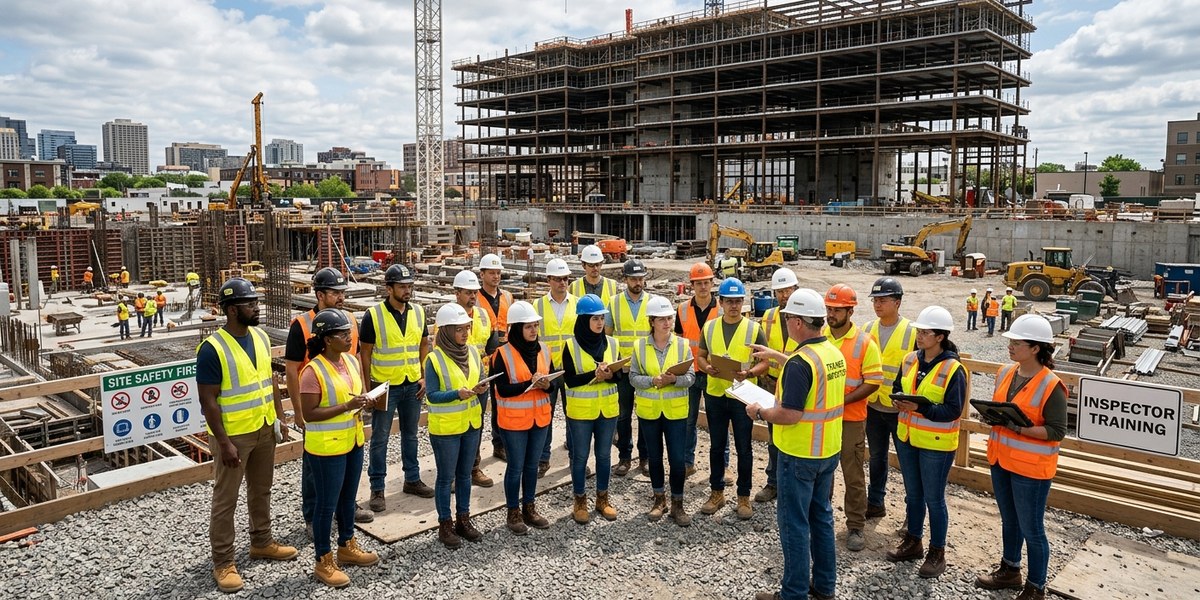
Roadmap at a Glance
| Aspect | Snapshot |
|---|---|
| Total timeline | 2–4 years (education plus supervised experience) |
| Total cost / financing (est.) | $5,000–$20,000 for degree, certifications, and exam fees |
| Primary hurdle | Passing ICC certification exams (e.g., Residential or Commercial Building Inspector) |
| Compensation snapshot | Median $67,700/year (BLS, most recent national estimates); top earners exceed $100,000 |
What Does This Career Do
Construction inspectors are the on-site enforcers of building safety and code compliance. They examine active construction projects to ensure structural integrity, electrical systems, plumbing, and fire safety meet local and national codes.
Their work protects public safety and helps avoid costly rework. A single missed violation can lead to structural failures, fires, or legal liability for builders and property owners.
Inspectors serve as the critical checkpoint between a blueprint and a finished building, verifying that every nail, wire, and pipe meets the standards set by the International Building Code (IBC) and local amendments.
- Review construction plans and blueprints before and during projects
- Conduct on-site inspections of foundations, framing, electrical, plumbing, and mechanical systems
- Document findings, photograph violations, and write detailed inspection reports
- Issue permits, citations, or stop-work orders when code violations are found
- Collaborate with contractors, builders, and code officials to resolve compliance issues
Inspectors typically specialize in one or more areas. A residential inspector might focus on single-family homes, checking everything from roof trusses to outlet spacing.
A commercial inspector deals with larger structures like office buildings and shopping centers, requiring knowledge of fire suppression systems, elevator codes, and accessibility standards.
Some inspectors focus exclusively on public works projects such as bridges, water treatment plants, and highways, where the stakes involve public infrastructure safety.
The daily reality of the job is far from monotonous. One morning you might be crawling through a crawlspace to verify insulation installation, and by afternoon you could be on a rooftop checking flashing and venting.
Each project presents unique challenges, from historic building renovations that require special code considerations to new construction where you must verify every stage from footing to finish.
Inspectors must also stay current with evolving materials and methods, such as cross-laminated timber or advanced framing techniques, which may not be explicitly covered in older code editions.
Beyond the technical aspects, the role demands strong interpersonal skills.
You will interact with a wide range of people, including homeowners who may be anxious about their investment, contractors who are under time pressure, and government officials who need accurate data for permitting and zoning decisions.
Being able to explain complex code requirements in plain language is essential.
For example, instead of simply citing a code section for insufficient egress window size, you might explain that the window must be large enough for a firefighter in full gear to enter, which helps the homeowner understand the safety rationale.
Key Terms & 2026 Industry Updates
International Code Council (ICC)
The ICC develops model building codes used across the United States. Most construction inspectors must hold ICC certifications, such as the Residential Building Inspector (B1) or Commercial Building Inspector (B2), to work in the field.
The ICC also offers specialized certifications for electrical, plumbing, mechanical, and fire protection inspections.
These credentials are recognized nationwide, making it easier to transfer your qualifications between states that accept ICC standards.
In 2026, the ICC is rolling out updated certification exams that reflect the 2024 IBC and IRC code editions.
This means that anyone studying for the B1 or B2 exam this year should use the most current study materials, as older editions may contain outdated requirements.
The ICC also offers a certification renewal program that requires continuing education credits, which can be earned through webinars, conferences, or self-paced online courses.
Many employers will reimburse the cost of these courses as part of professional development.
Building Code
A set of regulations that govern the design, construction, and occupancy of buildings. Codes vary by state and municipality, but the International Building Code (IBC) serves as the national baseline.
Local jurisdictions often adopt the IBC with amendments that reflect regional concerns, such as seismic requirements in California or wind resistance in Florida.
Inspectors must stay current with both the base code and local modifications, which can change every three years when new editions are published.
Understanding the hierarchy of codes is critical. The IBC covers commercial and multi-family buildings, while the International Residential Code (IRC) covers one- and two-family dwellings.
There are also specialized codes like the International Fire Code (IFC), International Plumbing Code (IPC), and International Mechanical Code (IMC).
An inspector who specializes in residential work might only need deep knowledge of the IRC, but a commercial inspector must be familiar with multiple codes.
Additionally, some states adopt the codes with a lag, so the 2024 IBC might not be enforced in your area until 2027 or later. Always verify which edition your jurisdiction uses.
Permit
An official document issued by a local building department that authorizes construction, renovation, or demolition. Inspectors verify work matches the approved permit.
Permits are typically required for structural changes, electrical work, plumbing alterations, and mechanical system installations. Without a permit, homeowners and contractors risk fines, legal action, and difficulty selling the property later.
Inspectors play a key role in ensuring that permitted work proceeds according to plan and that any deviations are corrected before the final sign-off.
The permit process involves multiple stages. A typical residential project might require a building permit, an electrical permit, a plumbing permit, and a mechanical permit for the HVAC system.
Each permit triggers its own set of inspections at specific milestones.
For example, a building permit for a new home might require inspections for footing, foundation, rough framing, rough electrical, rough plumbing, insulation, drywall, and final occupancy.
Missing any of these inspections can delay the project or result in a failed final inspection. Inspectors must carefully track which permits are active and which inspections have been completed to avoid issuing a certificate of occupancy prematurely.
2026 Update: Digital Inspection Tools
By 2026, more than half of U.S. building departments are expected to adopt digital inspection platforms. Inspectors will use tablets and mobile apps to document findings, submit reports in real time, and access code databases on-site.
This shift reduces paperwork and speeds up the inspection process, allowing inspectors to complete more visits per day.
Some platforms integrate with building information modeling (BIM) software, enabling inspectors to compare as-built conditions directly against digital plans.
For those entering the field, familiarity with common inspection apps like InspectCheck, PlanGrid, or Bluebeam will be a valuable asset during job interviews.
Digital tools also improve accuracy and accountability. Photographs taken during inspections are automatically geotagged and time-stamped, providing an irrefutable record of conditions at the time of the visit.
Some platforms use artificial intelligence to flag potential code violations based on image analysis, though this technology is still in its early stages and requires human verification.
Inspectors who embrace these tools can reduce their administrative workload and focus more time on actual inspections. However, there is a learning curve, and some older inspectors resist the transition.
If you are comfortable with technology, you will have a competitive edge in the job market.
2026 Update: Green Building Code Enforcement
New energy-efficiency standards, including the 2024 IECC updates, will be fully enforced by 2026. Inspectors will need training in sustainable construction practices, such as solar-ready roofs and high-performance insulation.
The 2024 IECC requires stricter air sealing, improved window performance, and verification of HVAC system efficiency.
Inspectors must understand how to test for air leakage using blower door tests and how to verify that insulation installation meets the specified R-values.
Some jurisdictions are also adopting green building certifications like LEED or Energy Star, which require additional inspection checkpoints.
Practical implications for inspectors include learning to use thermal imaging cameras to detect insulation gaps and air leaks.
You may also need to verify that ductwork is properly sealed and that mechanical ventilation systems meet fresh air requirements.
In some regions, inspectors are now required to perform a blower door test as part of the final inspection for new homes.
This test measures the building envelope’s airtightness and can reveal hidden issues like poorly sealed windows or gaps in the vapor barrier.
Understanding these tests and how to interpret the results is becoming a core competency for modern inspectors.
2026 Update: Remote Inspection Pilot Programs
Several states are piloting remote video inspections for certain trades, allowing inspectors to review work via live stream. This trend could expand by 2026, reducing travel time and speeding up project timelines.
Remote inspections are particularly useful for rough-in inspections, where the inspector can verify that wiring, plumbing, and framing are correct before drywall is installed.
However, not all inspections can be done remotely—structural and safety-critical checks still require an on-site presence.
Inspectors who are comfortable using video conferencing tools and documenting findings from a distance will have an advantage in this evolving landscape.
Remote inspections come with their own set of challenges. The contractor must have a stable internet connection and a camera capable of showing details like wire gauge labels or pipe joint fittings.
The inspector must be able to direct the contractor to move the camera to different angles and distances. Some jurisdictions require the inspector to record the entire session for later review.
Despite these hurdles, remote inspections can significantly reduce the backlog of inspection requests in busy building departments.
As the technology matures, more states are expected to adopt permanent remote inspection programs, especially for routine re-inspections of previously approved work.
Is This Career Right for You?
Construction inspection demands meticulous attention to detail and strong communication skills. You will spend most of your day on active job sites, climbing ladders, walking uneven terrain, and working in all weather conditions.
A typical day might involve inspecting a foundation pour in the morning, a roofing installation in the afternoon, and a final walkthrough of a completed home before issuing a certificate of occupancy.
Each inspection requires you to shift focus quickly, applying different code sections to different building systems.
If you enjoy hands-on problem-solving and have a commitment to public safety, this role can be deeply rewarding. Many inspectors take pride in knowing that their work prevents accidents and saves lives.
For example, catching a improperly installed electrical panel can prevent a fire, while verifying that a handrail meets height requirements can prevent a fall.
The sense of responsibility is significant, but so is the satisfaction of seeing a project through from foundation to finish.
This career is not a fit if you prefer desk-based work or dislike enforcing rules with contractors. You must be comfortable delivering tough feedback and holding builders accountable.
Contractors may push back when you flag a violation, especially if it means redoing work or delaying the project. You need the confidence to stand by your decisions, backed by your knowledge of the code.
At the same time, you must be diplomatic—explaining why a correction is needed and how to fix it without escalating tensions.
Good fit if you:
- Have a sharp eye for detail and can spot code violations quickly
- Are comfortable working outdoors and on active construction sites
- Enjoy learning technical building codes and applying them in the field
- Possess strong integrity and can stand by your decisions
- Can communicate clearly with contractors, homeowners, and government officials
- Are physically capable of climbing, bending, and walking for extended periods
Not a fit if you:
- Prefer a predictable, indoor work environment
- Dislike conflict or confrontation with contractors
- Struggle with physical demands like climbing and walking for long periods
- Are uncomfortable with heights or confined spaces like attics and crawlspaces
- Prefer to avoid paperwork and detailed documentation
Beyond these general traits, consider your long-term career goals. Some inspectors move into supervisory roles, such as chief building official or plan review manager, which require additional certifications and experience.
Others transition into consulting, offering their expertise to architects and developers during the design phase to ensure code compliance from the start.
There are also opportunities in teaching, where experienced inspectors train the next generation at community colleges or through ICC workshops.
If you enjoy variety and continuous learning, construction inspection offers a stable career path with multiple avenues for advancement.
Requirements
- Education: High school diploma or equivalent; an associate degree in building inspection technology, construction management, or civil engineering technology is common and preferred by many employers. Some community colleges offer dedicated building inspection programs that include courses in blueprint reading, construction materials, and code enforcement. A bachelor’s degree is rarely required but can help you qualify for supervisory roles or higher pay.
- Exams: Must pass one or more ICC certification exams, such as the Residential Building Inspector (B1) or Commercial Building Inspector (B2). Some states require additional trade-specific exams for electrical, plumbing, or mechanical inspections. The exams are multiple-choice and cover topics like structural loads, fire resistance, egress requirements, and accessibility standards. You can register for exams through the ICC website and take them at approved testing centers or online proctored sessions.
- Licensing: Many states and municipalities require a construction inspector license. Licensing often requires a combination of education, experience, and passing a state-specific exam. For example, California requires a Certified Building Inspector license, while Texas issues licenses through the Texas Department of Licensing and Regulation. Some cities, like New York and Chicago, have their own licensing programs that may be more stringent than state requirements.
- Continuing Education: ICC certifications and state licenses typically require renewal every 2–3 years, with mandatory continuing education hours to stay current on code updates. The ICC requires 24 continuing education hours per renewal cycle for most certifications. Courses are available online or in person and cover new code provisions, emerging technologies, and best practices in inspection.
- Background Check: Most government agencies require a criminal background check before issuing a license or hiring an inspector. Felony convictions, especially those involving fraud or theft, may disqualify you from licensure. Some states also check for past code violations or disciplinary actions in related fields.
In addition to these formal requirements, practical experience is highly valued. Many employers prefer candidates who have worked in the construction trades before becoming inspectors.
A former electrician, for instance, has firsthand knowledge of wiring practices and can spot code violations more intuitively. Similarly, a former carpenter understands framing and structural loads.
If you are coming from a trade background, you may be able to shorten the education requirement by leveraging your experience.
Some states allow you to substitute years of trade experience for formal education, though you will still need to pass the ICC exams.
Licensing & State Variations
Construction inspector licensing is not uniform across the United States. Some states, like California and Texas, have strict state-level licensing boards, while others defer to local municipalities or rely solely on ICC certification.
This patchwork system means you must research the requirements in your specific area before starting your career.
If you plan to move or work in multiple states, consider pursuing ICC certifications, which are widely accepted and can streamline the reciprocity process.
Always check with your state’s building code agency or department of labor for specific requirements. Many states publish detailed guides on their websites, including application forms, fee schedules, and exam outlines.
You can also call the local building department to ask about their hiring preferences and whether they accept out-of-state certifications.
- California: Requires a Certified Building Inspector license through the California Building Standards Commission, plus ICC certification. California also has specific requirements for seismic and fire safety inspections due to the state’s earthquake risk and wildfire zones.
- Texas: The Texas Department of Licensing and Regulation (TDLR) issues licenses for various inspection specialties, including electrical and plumbing. Texas does not have a single “construction inspector” license; instead, you must apply for the specific trade license that matches your expertise.
- New York: New York City has its own Department of Buildings certification program, which is separate from ICC but often accepted in lieu of it. The city’s program includes a written exam and a practical field test. Outside of NYC, New York State accepts ICC certifications for most inspector roles.
- Florida: Requires a Building Code Administrator or Inspector license through the Florida Building Commission, with specific categories for structural, electrical, plumbing, and mechanical inspections. Florida’s licensing process includes a background check, proof of experience, and a state-specific exam that covers the Florida Building Code.
- No State License: A few states, such as Vermont and Wyoming, do not require a state-level license but still expect ICC certification and local permits. In these states, individual cities or counties may have their own
