You can become a diesel mechanic in as little as one year, though the typical route takes three to four years. Total training and tool costs are estimated between $5,500 and $22,000.
The primary bottleneck is mastering electronic diagnostic systems, not just mechanical repair. Median pay for the role is $54,000 per year, with experienced technicians earning significantly more.
Roadmap at a Glance
| Dimension | Snapshot |
|---|---|
| Total timeline | 1–7 years (fastest: 1 year; typical: 3–4 years; conservative: 5–7 years) |
| Total cost / financing (est.) | $5,500–$22,000 (tuition, tools, certification fees; financial aid and employer tuition reimbursement often available) |
| Primary hurdle | Learning to diagnose complex electronic engine and emissions systems |
| Compensation snapshot | Median annual wage of $54,000 (2026 figures); top earners in field service and union shops exceed $75,000 |
Who This Roadmap Is For (and Not For)
This guide is for you if you enjoy hands-on mechanical work, want a stable career without a four-year degree, and are comfortable working in noisy, greasy, and sometimes outdoor environments.
It’s also for career changers who already have basic mechanical aptitude and want a structured path into a trade with steady demand.
This roadmap is not for you if you dislike physical labor, prefer a desk job, or cannot tolerate exposure to diesel fumes, extreme temperatures, or heavy lifting.
It’s also not ideal if you want to work exclusively on gasoline-powered cars—that’s the separate path of an automotive mechanic.
The Big Picture: Stages From Zero to Job-Ready
Becoming a job-ready diesel mechanic involves five clear phases. You start with a high school diploma or GED, then move through formal training, entry-level work, certification, and finally advancement to a lead role.
Each stage builds on the last, and skipping steps can limit your earning potential.
The entire process typically takes three to four years, but you can begin earning a paycheck as a trainee after just one year of training. The key is to combine classroom knowledge with real-world shop experience as early as possible.
Time Investment: Realistic Ranges
The fastest path to a paid diesel mechanic job takes about one year: earn a GED (if needed), complete a six-month certificate program, then work six months as a lube technician or trainee.
This gets your foot in the door, but you’ll still need several years to master the full scope of repairs.
The typical timeline is three to four years: finish high school, enroll in a one- to two-year diesel technology program, then work one to two years gaining experience before earning ASE certifications. This is the most common and recommended route.
A conservative timeline of five to seven years applies if you study part-time while working another job, delay certification, or take longer to find a training program.
Older career changers often fall into this band due to family or financial constraints.
Cost Reality Check
| Expense Category | Estimated Cost |
|---|---|
| Diesel technology program tuition | $5,000–$20,000 for certificate or associate degree |
| ASE certification exam fees | $200–$800 for multiple tests |
| Starter tool set | $500–$2,000 for quality tools |
| EPA Section 609 certification | $30–$50 for online course and test |
Total estimated costs range from about $5,500 to $22,000. Most community college programs qualify for federal financial aid, and many employers offer tool allowances or tuition reimbursement after you’re hired.
Avoid the temptation to buy cheap tools—investing in a solid starter set from brands like Snap-on or Matco pays off in durability and efficiency.
Phase-by-Phase Action Plan
-
Complete High School or GED
Earn your diploma or pass the GED tests. This is the non-negotiable foundation for any formal training program or apprenticeship.
If you’re still in high school, take automotive repair, welding, or electronics classes if available—they give you a head start.
-
Enroll in a Diesel Technology Program
Choose a certificate (1 year) or associate degree (2 years) program accredited by the National Institute for Automotive Service Excellence (ASE).
Look for programs that include hands-on lab time, externship placements, and test prep for ASE certifications. Avoid for-profit schools with inflated tuition—community colleges often offer the same quality for a fraction of the cost.
-
Gain Entry-Level Experience
Work as a diesel mechanic trainee, lube technician, or shop helper. Your first job will involve oil changes, tire rotations, and basic inspections under the supervision of senior mechanics.
Focus on learning diagnostic procedures and building speed without sacrificing quality. This phase typically lasts one to two years.
-
Obtain ASE Certifications
Pass the ASE Medium-Heavy Truck Certification exams (T1 through T8). These cover gasoline engines, diesel engines, drivetrain, brakes, suspension, electrical systems, HVAC, and preventive maintenance.
Earning Master Medium-Heavy Truck Technician status requires passing all eight tests and having two years of hands-on experience. The EPA Section 609 certification for A/C handling is also required if you’ll work on HVAC systems.
-
Advance to Journeyman or Lead Mechanic
After three to five years of experience and full ASE certification, you can move into a lead mechanic role. This involves diagnosing complex issues, mentoring new technicians, and managing your own workload.
Some shops require a journeyman card from a union apprenticeship program, while others promote based on skill and tenure.
Key Terms & 2026 Industry Updates
ASE Certification
National standard for automotive and diesel technician competence. Passing the T1–T8 exams demonstrates mastery of medium-heavy truck repair. Most employers require at least two ASE certifications for promotion beyond entry-level.
EPA Section 609 Certification
Required for anyone handling motor vehicle air conditioning refrigerants. The online course costs under $50 and is valid for life. You’ll need this if you work on HVAC systems in trucks and buses.
Electronic Diagnostic Systems
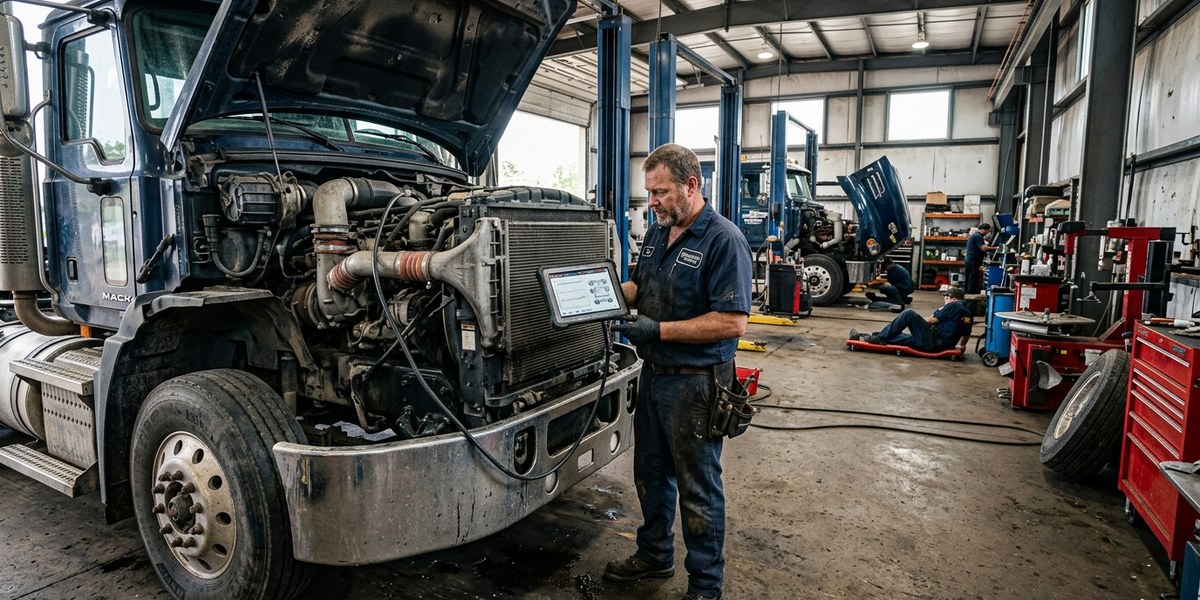
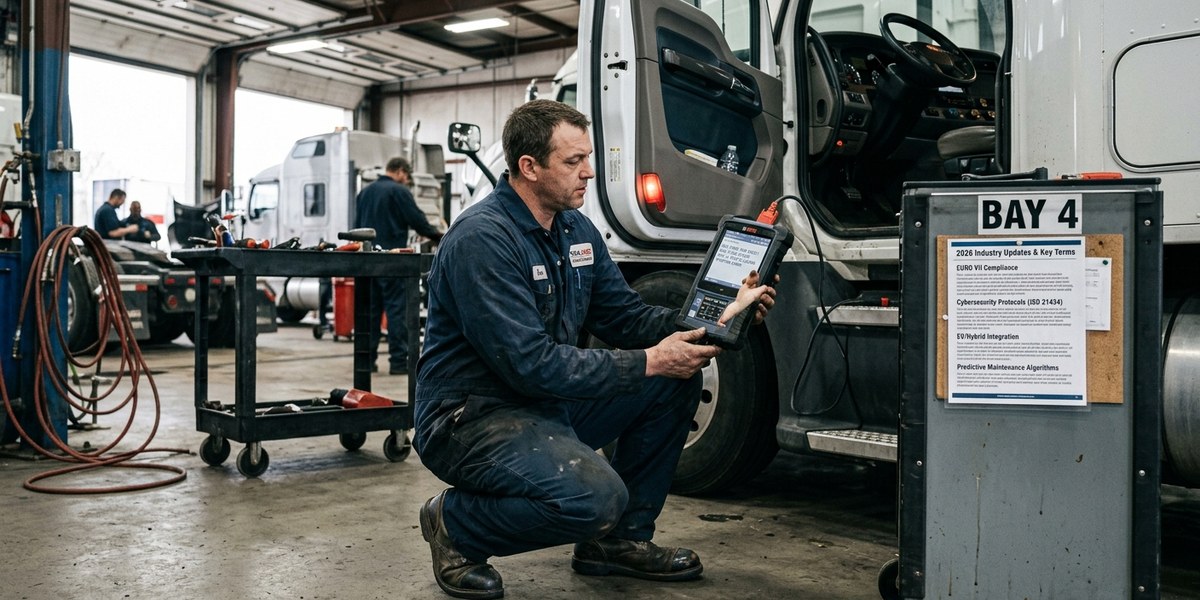
Modern diesel engines use computerized controls (ECUs) to manage fuel injection, emissions, and performance. Technicians must interpret diagnostic trouble codes (DTCs) using scan tools and oscilloscopes.
This is the skill that separates a parts-swapper from a true mechanic.
Diesel Exhaust Fluid (DEF) Systems
Since 2010, all heavy-duty diesel trucks use Selective Catalytic Reduction (SCR) with DEF to meet EPA emissions standards. Mechanics must understand DEF contamination, crystallization, and sensor failures—a growing area of service calls in 2026.
Electric Vehicle (EV) Diesel-Hybrid Integration
An emerging trend in 2026: delivery trucks and buses increasingly combine diesel engines with electric drive systems. Technicians who train on high-voltage safety and hybrid diagnostics will be in high demand as fleets modernize.
Telematics & Predictive Maintenance
Fleet operators now use GPS and sensor data to predict component failures before they happen. Diesel mechanics in 2026 need basic data literacy to interpret telematics reports and schedule proactive repairs, reducing truck downtime.
Licensing & State Variations (Compact)
No state requires a specific license to work as a diesel mechanic.
However, you must hold EPA Section 609 certification to handle refrigerants, and some states require a commercial driver’s license (CDL) if you test-drive heavy trucks on public roads.
Union shops and government fleet jobs may demand a journeyman card from a state-approved apprenticeship program.
State variations are minimal but worth noting. California and New York have stricter emissions testing requirements, meaning mechanics in those states need deeper knowledge of SCR and diesel particulate filter (DPF) systems.
Texas and the Midwest have higher concentrations of trucking jobs, while the Northeast has more bus and municipal fleet work.
Regardless of location, ASE certification is the de facto national standard—it transfers across state lines and is recognized by virtually all employers.
Salary & Job Outlook
Diesel mechanics earn a solid middle-class income with strong demand across the transportation sector.
According to the latest available Bureau of Labor Statistics (BLS) figures, the median annual wage for diesel service technicians and mechanics is approximately $54,000.
The top 10% of earners make over $75,000, while entry-level positions start around $35,000 to $40,000. Job growth is projected at 5% through the early 2030s, creating roughly 28,000 openings each year as fleets expand and current mechanics retire.
| Experience Level | Annual Salary (Est.) | Hourly Rate (Est.) |
|---|---|---|
| Entry-Level (0–2 years) | $35,000–$42,000 | $17–$20 |
| Mid-Career (3–5 years, ASE certified) | $48,000–$60,000 | $23–$29 |
| Senior / Lead Mechanic (6+ years) | $62,000–$78,000 | $30–$38 |
| Master Technician / Specialist | $75,000–$90,000+ | $36–$43+ |
Salary by Practice Setting
Where you work significantly impacts your paycheck and daily routine. Dealerships and union shops typically offer higher wages, while independent repair garages may provide more flexibility.
The table below breaks down typical starting pay and work-life balance across common settings.
| Practice Setting | Starting Salary (Est.) | Work-Life Balance |
|---|---|---|
| Truck Dealership | $40,000–$48,000 | Moderate; some Saturday hours required |
| Independent Repair Shop | $36,000–$44,000 | Good; typically Monday–Friday, fewer on-call shifts |
| Fleet Maintenance (e.g., trucking company) | $38,000–$46,000 | Moderate; may include night or weekend rotations |
| Government / Municipal Fleet (buses, waste trucks) | $42,000–$50,000 | Excellent; stable schedule, union benefits |
| Field Service / Mobile Mechanic | $45,000–$55,000 | Variable; travel and overtime can increase pay but reduce predictability |
- Union positions often include pension plans, health insurance, and paid apprenticeship programs that raise total compensation by 15–25% above non-union roles.
- Overtime is common in this field—many mechanics boost their annual earnings by 10–20% through extra hours, especially during peak shipping seasons.
- Geographic pay differences are notable: mechanics in California, New York, and Illinois earn 10–20% more than the national median, while those in the Southeast and rural areas may start lower but face lower living costs.
Getting Your First Role
Landing your first job as a diesel mechanic requires a mix of credentials, practical skills, and a smart job search strategy. Most employers expect you to have at least a certificate from an accredited program and a basic set of tools.
Your resume should highlight hands-on lab experience, any externships, and your ability to use diagnostic scan tools.
If you completed a program through a community college with a placement partnership, leverage that connection first—many shops hire directly from these pipelines.
When interviewing, be prepared to demonstrate mechanical aptitude. Some employers give a practical test, such as removing and reinstalling a brake caliper or reading a wiring diagram.
Emphasize your willingness to learn and your comfort with technology. Entry-level roles like lube technician or shop helper are stepping stones; accept one even if it pays less than you hoped, because the experience and mentorship are invaluable.
Use online job boards like Indeed and specialized transportation sites, but also visit local truck stops and fleet yards in person—many shop managers prefer to hire someone who shows initiative by showing up.
Networking matters more than you might think. Join online forums for diesel techs, attend local trade school open houses, and ask instructors for leads. A recommendation from a trusted teacher can open doors that a cold application cannot.
Once you secure a role, focus on safety, punctuality, and asking smart questions. Your first year is about building trust and speed; the certifications will come next.
