
Learning how to become a truck driver takes 3 to 7 weeks of training and passing CDL exams, with total costs estimated between $3,000 and $7,000. The primary bottleneck is passing the state-administered Commercial Driver’s License (CDL) skills test.
Table of Contents
n
- What Does This Career Do
- Key Terms & 2026 Industry Updates
- Commercial Driver’s License (CDL)
- Hours of Service (HOS)
- Electronic Logging Device (ELD)
- Entry-Level Driver Training (ELDT)
- Autonomous Truck Technology
- Is This Career Right for You?
- Requirements
- Licensing & State Variations
- Step-by-Step Guide
- Related Careers
- Related questions
n
n
n
n
n
n
n
n
n
n
n
n
n
n
nn
The median annual pay is approximately $49,920, with experienced drivers earning significantly more.
What Does This Career Do
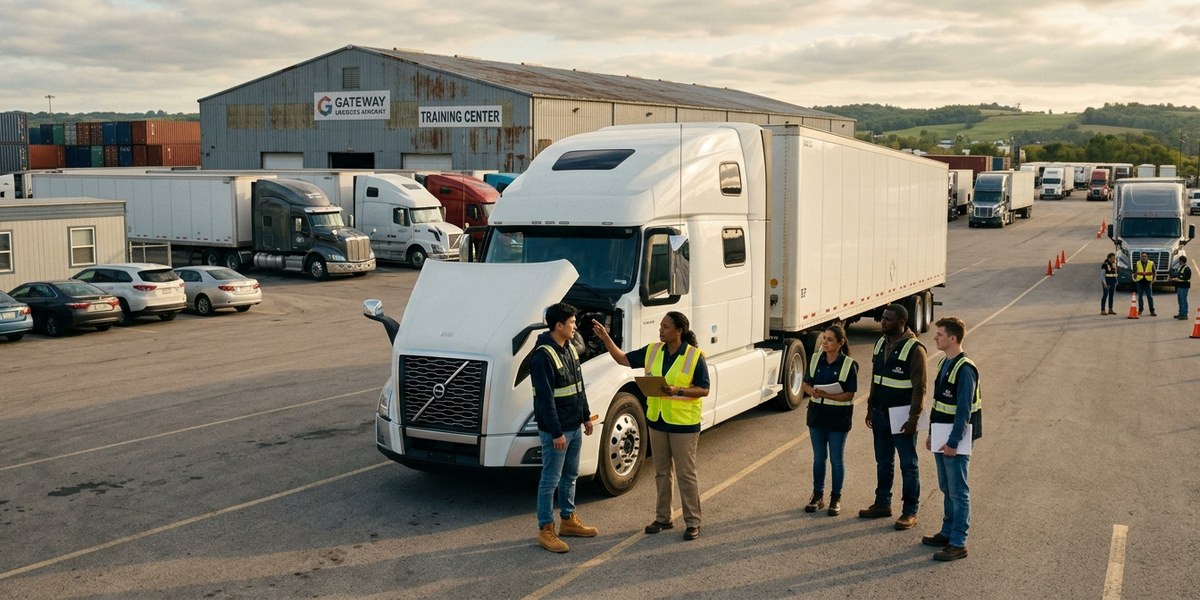
Truck drivers transport goods over short or long distances, ensuring timely and safe deliveries. They operate heavy trucks, including tractor-trailers, and must comply with federal and state regulations. Key responsibilities include:
- Performing pre-trip and post-trip vehicle inspections to ensure safety and compliance
- Planning and navigating routes using GPS and maps while managing hours-of-service limits
- Loading and unloading cargo, including securing loads with straps and chains
- Maintaining logs of driving hours, fuel purchases, and delivery paperwork
- Communicating with dispatchers and customers to adjust schedules or address issues
Beyond these basics, truck drivers also manage unexpected situations like road closures, vehicle breakdowns, and weather delays. They must be adept at problem-solving on the fly, often without immediate support.
For example, if a delivery site has a damaged loading dock, the driver must decide whether to wait for repairs, find an alternate drop-off point, or refuse the delivery to protect the cargo.
This level of responsibility means drivers are not just operators but also logistics coordinators on the road.
Additionally, drivers are responsible for maintaining their truck’s cleanliness and reporting any mechanical issues promptly.
A well-maintained truck reduces the risk of breakdowns and extends the vehicle’s lifespan, which is especially important for owner-operators who bear maintenance costs directly.
Many companies also require drivers to participate in safety meetings and ongoing training sessions to stay updated on regulations and best practices.
Another critical aspect of the job is managing fatigue and health. Long hours of sitting, irregular sleep schedules, and limited access to healthy food can take a toll on your body.
Successful drivers develop routines to stay active during stops, pack nutritious meals, and prioritize sleep even when schedules are tight.
Some carriers now offer wellness programs that include gym memberships at truck stops or discounts on healthy meal delivery services, recognizing that a healthy driver is a safer driver.
Customer service skills are also increasingly important. Drivers often interact with shippers, receivers, and the general public.
A courteous and professional demeanor can make the difference between a smooth delivery and a complaint that gets back to your dispatcher.
For example, if a receiver is unhappy with the condition of the cargo, a driver who communicates clearly and documents the issue can protect both the company and themselves from liability.
Many carriers now include customer service training as part of their onboarding process.
Key Terms & 2026 Industry Updates
Commercial Driver’s License (CDL)
A state-issued license required to operate heavy trucks. Classes include Class A (combination vehicles) and Class B (single heavy vehicles).
Hours of Service (HOS)
Federal regulations limiting driving time to 11 hours per day after 10 consecutive hours off, with a 14-hour on-duty window.
In 2026, the Federal Motor Carrier Safety Administration (FMCSA) is expected to finalize updates to HOS rules for short-haul drivers, potentially expanding the air-mile radius from 100 to 150 miles.
This change would allow short-haul drivers more flexibility in their daily routes without needing to log every stop, reducing paperwork burdens.
However, long-haul drivers should note that the 11-hour driving limit remains unchanged, and any extension of the short-haul radius does not affect their daily maximum.
It is also worth noting that the FMCSA has been piloting a program that allows drivers to take a 30-minute break in the cab rather than off-duty, as long as the truck is parked and the driver is not performing any work tasks.
This change, if finalized, would give drivers more flexibility in choosing where and how to rest, especially in areas where safe parking is scarce. Keep an eye on FMCSA announcements in 2026 for updates on this and other HOS modifications.
Electronic Logging Device (ELD)
Mandatory devices that automatically record driving hours. By 2026, new ELD standards may require enhanced data-sharing capabilities for roadside inspections.
This means that during a traffic stop, an officer could potentially access your logs wirelessly, reducing the time you spend parked on the shoulder. Drivers should ensure their ELD is updated to the latest firmware to avoid compliance issues.
Some older devices may not meet the new standards, so check with your carrier or device manufacturer for upgrade options.
Another development in the ELD space is the integration of real-time traffic and weather data.
Some newer ELD systems can suggest alternate routes to avoid congestion or severe weather, helping drivers stay within their HOS limits while maximizing efficiency.
While these features are not yet mandatory, they are becoming more common in fleet management systems. If you are an owner-operator, investing in a modern ELD with these capabilities could give you a competitive edge in bidding for loads.
Entry-Level Driver Training (ELDT)
FMCSA-mandated curriculum for new CDL applicants, effective since 2022. In 2026, refresher training requirements for drivers switching between Class A and Class B may be streamlined.
This is good news for drivers who want to upgrade their license or switch vehicle types without repeating the entire training program.
However, the ELDT requirement still applies to anyone obtaining a CDL for the first time, so new drivers must complete training from a registered provider before taking the skills test.
It is also important to understand that ELDT is not just a one-time requirement. If you let your CDL lapse for more than a year, you may need to retake ELDT before reapplying.
This is a common pitfall for drivers who leave the industry temporarily and then try to return. To avoid this, keep your medical card current and renew your license on time, even if you are not actively driving.
Some states offer a “non-driving” CDL status that allows you to maintain your license without meeting medical requirements, but this varies by state.
Autonomous Truck Technology
Level 4 autonomous trucks are being tested on select U.S. highways. While full deployment is years away, 2026 may see limited commercial routes in states like Texas and Arizona, potentially shifting demand toward local and specialized driving roles.
For new drivers, this means that over-the-road (OTR) positions may become less common over the next decade, while jobs requiring human judgment-such as hazmat hauling, flatbed securing, and final-mile delivery-will remain in high demand.
Specializing early can future-proof your career against automation.
However, it is important not to overreact to automation headlines.
Even in a best-case scenario for autonomous trucks, human drivers will still be needed for the foreseeable future for tasks like navigating complex urban environments, handling non-standard loads, and interacting with customers.
The more likely scenario is that automation will augment drivers rather than replace them, with trucks handling highway cruising while drivers take over for local delivery and problem-solving.
Staying adaptable and willing to learn new skills will be your best defense against technological disruption.
Is This Career Right for You?
Truck driving offers independence and steady demand, but it requires long hours on the road and time away from home. This career suits individuals who value solitude and can handle physical tasks like loading cargo.
It may not be ideal for those seeking a 9-to-5 routine or who struggle with extended periods of sitting.
You may be a good fit if:
- You enjoy driving and can stay alert for long stretches
- You are comfortable with irregular schedules and overnight travel
- You have strong self-discipline to manage paperwork and compliance
- You are mechanically inclined and can perform basic vehicle inspections and minor repairs
- You are patient and can handle traffic delays, detours, and waiting at loading docks without frustration
This career may not be right if:
- You prefer a fixed daily routine or frequent social interaction
- You have physical limitations that make climbing in and out of a cab or lifting heavy items difficult
- You dislike working in all weather conditions
- You have a history of chronic back pain or other conditions aggravated by prolonged sitting
- You are unwilling to adhere to strict federal regulations regarding driving hours and drug testing
It is also worth considering your family situation. If you have young children or a partner who needs regular support, being away for weeks at a time can strain relationships.
Many drivers start with OTR to gain experience, then transition to regional or local routes once they have a clean record. Some companies offer “home weekly” options that allow you to be home every weekend, which can be a good compromise.
Another factor to consider is your tolerance for loneliness. While some drivers enjoy the solitude of the road, others find it isolating.
If you are the type of person who thrives on social interaction, you may struggle with the long hours alone in the cab. However, technology has made it easier to stay connected.
Many drivers use Bluetooth headsets to talk to family and friends while driving, and truck stops offer Wi-Fi for video calls during breaks.
Some carriers even have driver lounges with satellite TV and gaming consoles at their terminals, providing a sense of community when you are off duty.
Finally, consider your financial goals. Truck driving can be a lucrative career, but it requires discipline to manage your finances, especially if you are an owner-operator.
Unexpected expenses like tire replacements, engine repairs, or even a week of bad weather can eat into your profits. If you are not comfortable with financial uncertainty, working as a company driver with a steady paycheck may be a better fit.
Many company drivers also receive benefits like health insurance, retirement plans, and paid time off, which can provide a safety net that owner-operators lack.
How to Become a Truck Driver: Requirements
- Education: High school diploma or equivalent
- Training: Completion of a CDL training program (3-7 weeks)
- Exams: CDL written knowledge test and skills test (pre-trip inspection, basic control, on-road driving)
- License: Valid Commercial Driver’s License (Class A or B) from your state of residence
- Medical: DOT physical exam and medical card
- Age: Minimum 18 for intrastate driving; 21 for interstate and hazardous materials
- Background check: Clean driving record and no disqualifying criminal offenses
- Continuing education: Periodic endorsements for tanker, hazmat, or double/triple trailers
Beyond these formal requirements, successful truck drivers typically possess strong time management skills, basic math ability for logbooks and fuel calculations, and a willingness to learn new technology as it emerges.
Many carriers also require a pre-employment drug screening and random drug testing throughout your career.
If you have a history of substance abuse, be aware that the industry has zero-tolerance policies, and a positive test can disqualify you from driving for years.
It is also important to note that some carriers have additional requirements beyond the federal minimums. For example, many large fleets require a minimum of one year of verifiable driving experience before they will hire you for certain positions.
Others may require a credit check, especially for positions that involve handling cash or high-value cargo.
If you have a less-than-perfect credit history, do not be discouraged-many smaller carriers are more flexible and may be willing to work with you as long as you have a clean driving record and a good attitude.
Another often-overlooked requirement is the ability to pass a road test during the hiring process. Even after you have your CDL, most carriers will put you through a road test to assess your skills.
This test typically includes a pre-trip inspection, a backing maneuver, and a short drive on public roads. If you fail the road test, the carrier may offer you additional training or may decline to hire you.
To prepare, practice your skills regularly, even after you have your license, and consider taking a refresher course if you have been out of practice.
Licensing & State Variations
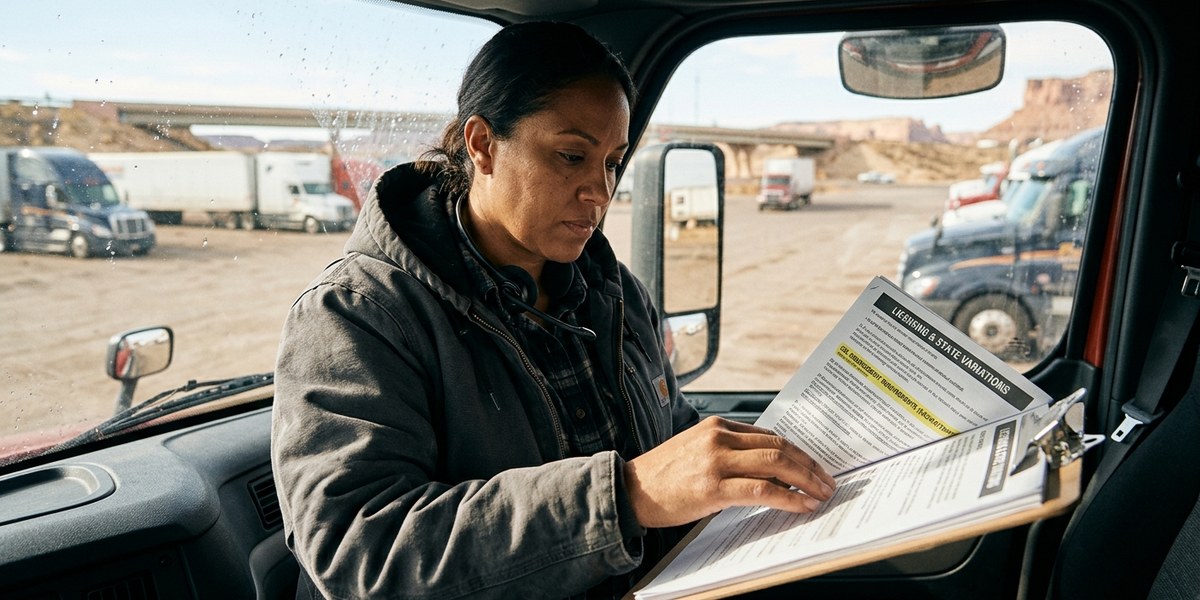
While the CDL is standardized under federal guidelines, each state issues its own license with specific testing and fee structures. Some states require additional endorsements for specialized cargo.
Drivers must maintain a valid medical certificate and may need to pass annual driving record reviews.
- Class A CDL: Required for combination vehicles (tractor-trailers); allows most job types
- Class B CDL: For single heavy vehicles (dump trucks, buses); limited to straight-frame trucks
- Endorsements: H (hazmat), N (tankers), T (double/triple trailers), P (passenger)
- State reciprocity: CDLs are valid across states, but moving requires transferring to your new state within 30 days
- Testing variations: Some states use third-party testers; others administer all tests at DMV offices
One important variation is the cost of testing and licensing.
For example, California charges around $100 for the CDL written test and $150 for the skills test, while Texas fees are lower but may require additional background check fees for hazmat endorsements.
Some states also require a separate “knowledge test” for air brakes if you plan to operate vehicles equipped with them. Check your state’s DMV website for exact fees and requirements before scheduling your tests.
Another variation is the availability of third-party testers. In states like Florida and Georgia, you can take your skills test at a private training school, which often means shorter wait times and a more familiar testing environment.
In contrast, states like New York and Illinois may require you to test at a state-run facility, where wait times can be several weeks. Plan accordingly to avoid delays in your timeline.
It is also worth noting that some states have reciprocity agreements for certain endorsements.
For example, if you have a hazmat endorsement from one state, you may not need to retake the knowledge test when you move to another state, but you will still need to pass a new background check.
However, the tanker and double/triple trailer endorsements are generally transferable without additional testing. Always check with your new state’s DMV before assuming your endorsements will carry over.
Finally, be aware that some states have additional requirements for drivers under 21. For example, in some states, drivers under 21 can only operate within the state’s borders and cannot cross state lines.
This can limit your job options, as many carriers require interstate driving. If you are under 21, focus on finding local or intrastate positions that will allow you to gain experience until you are old enough to drive interstate.
Some states also offer restricted CDLs for drivers under 21 that allow them to drive within a certain radius of their home base.
Step-by-Step Guide
-
Meet basic eligibility requirements. Ensure you are at least 18 (21 for interstate driving), have a high school diploma or equivalent, and can pass a DOT physical exam. Obtain a commercial learner’s permit (CLP) by passing the written knowledge test.
When you go to take your written test, bring all required documents, including proof of identity, residency, and your Social Security card. Some states also require a birth certificate or passport.
Check your state’s DMV website for a complete list of required documents to avoid multiple trips. Also, be prepared to pay the testing fee, which varies by state but is typically between $25 and $100.
-
Enroll in a CDL training program. Choose a school accredited by the Professional Truck Driver Institute (PTDI) or an employer-sponsored program. Programs last 3-7 weeks and cover vehicle inspection, backing maneuvers, and on-road driving.
