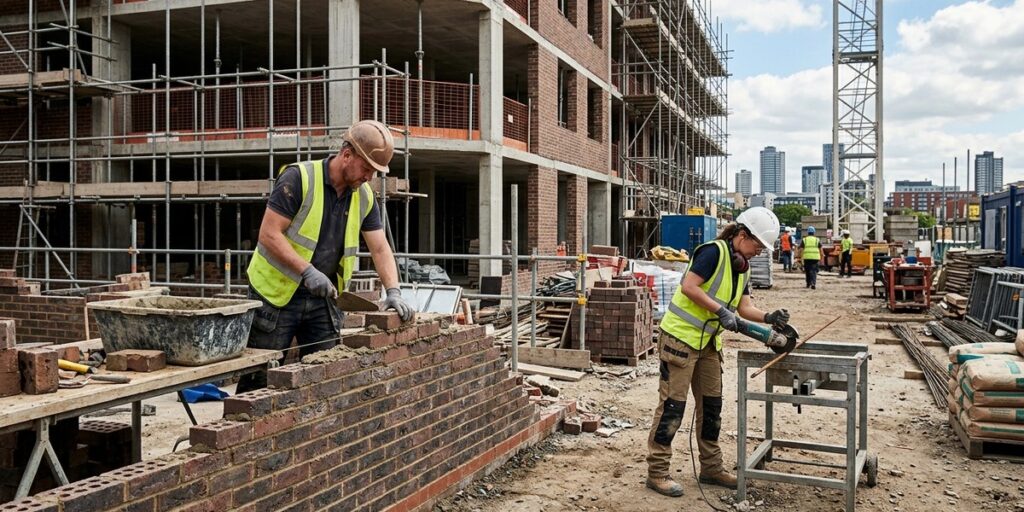
Who Is a Mason? Understanding the Masonry Trade
A mason is a skilled tradesperson who works with brick, block, stone, concrete, and other masonry materials to build and repair structures — walls, foundations, patios, walkways, fireplaces, chimneys, and decorative features. Masonry is one of the oldest construction trades, dating back thousands of years to the pyramids of Egypt and the Great Wall of China. Today, masons combine traditional hand skills with modern tools and materials to create durable, fire-resistant, and aesthetically pleasing structures.
Bricklayer vs Concrete Mason: Key Differences
While both are masons, bricklayers and concrete masons specialize in different materials and techniques.
Bricklayer (Brickmason)
Bricklayers work with brick, concrete block, structural tile, and stone. They lay units in patterns with mortar, creating walls, partitions, arches, and veneers. Bricklaying requires precision — each brick must be level, plumb, and properly spaced for consistent mortar joints. Experienced bricklayers can lay 300 to 500 bricks per day. They read blueprints, calculate material quantities, and work in all weather conditions. The work is physically demanding — lifting 50 to 80 pounds repeatedly, kneeling, bending, and working on scaffolding at heights.
Concrete Mason (Cement Mason)
Concrete masons work with poured concrete — pouring, leveling, smoothing, and finishing concrete surfaces for foundations, slabs, sidewalks, curbs, steps, and decorative applications. They use tools like screeds (to level poured concrete), floats (to smooth it), trowels (to finish it), and edgers (to shape edges). Concrete masons must understand concrete mix design, curing times, reinforcement placement, and expansion joints. Decorative concrete — stamped patterns, colored finishes, exposed aggregate — is a growing specialty within concrete masonry.
Types of Masons and Specializations
Refractory Masons: Specialize in high-heat applications — fireplaces, pizza ovens, furnaces, kilns, and industrial boilers. They use specialized firebrick and refractory mortar that withstands extreme temperatures.
Stone Masons (Stonemasons): Work with natural stone — granite, limestone, sandstone, marble, slate. Stone masonry divides into two categories: Rubble masonry uses irregular stones fitted together, and ashlar masonry uses precisely cut rectangular stones. Stone masons often work on high-end residential and commercial projects, restoration of historic buildings, and memorials.
Restoration Masons: Specialize in repairing and restoring historic masonry structures. This requires knowledge of traditional techniques, historic mortar formulations (often lime-based rather than Portland cement), and matching existing materials. Restoration masonry is in high demand as historic buildings age and require preservation.
Mason Tools and Techniques
Basic masonry tools include trowels (for spreading mortar), jointers (for finishing mortar joints between bricks), levels (for ensuring plumb and level work), masonry saws (for cutting brick and block to size), and chisels and hammers for splitting stone. Power tools include mixers, saws with diamond blades, and grinders. Modern masons also use laser levels for precision layout and mortar pumps for large commercial projects. Safety equipment — gloves, eye protection, dust masks, and hearing protection — is essential since masonry work generates silica dust, which causes silicosis with prolonged exposure.
Mason Salary and Career Outlook
The median annual wage for masons in the United States is approximately $50,000 to $60,000 depending on specialization. Bricklayers earn slightly more than concrete masons on average due to the higher precision required. Top earners — experienced commercial masons and those who own their own business — earn $80,000 to $100,000+. Apprentices start at 40 to 50 percent of journeyman wages, with increases every 6 to 12 months as skills progress. The BLS projects steady demand for masons, driven by population growth, infrastructure spending, and the need to maintain and repair existing structures.
How to Become a Mason
Most masons learn through a 3- to 4-year apprenticeship program administered by the International Union of Bricklayers and Allied Craftworkers (BAC) or independent contractor associations. Apprenticeships combine paid on-the-job training with classroom instruction in blueprint reading, masonry math, material science, and safety. Some masons start as laborers and learn informally on the job, but formal apprenticeships produce more skilled and better-paid workers. After completing an apprenticeship, masons may earn journeyman status and, with additional experience, become supervisors, estimators, or business owners.
Frequently Asked Questions
Is masonry a good career?
Yes. Masonry offers stable employment, good pay without college debt, the satisfaction of creating permanent structures, and opportunities for self-employment. The work is physically demanding, but experienced masons can earn comfortable middle-class wages and many work outdoors.
What is the difference between a mason and a bricklayer?
The terms are often used interchangeably, but “mason” is the broader term encompassing anyone who works with masonry materials (brick, stone, concrete block). “Bricklayer” specifically refers to masons who work with brick and block. All bricklayers are masons, but not all masons are bricklayers — concrete masons and stone masons are also masons.
Do masons need a license?
Licensing requirements vary by state. Unlike plumbers or electricians, masons are not universally licensed. Some states require general contractor licensing for any construction work over a certain dollar amount. Certification through the Mason Contractors Association of America (MCAA) or the BAC is voluntary but demonstrates competence and can lead to higher pay.
Is masonry hard to learn?
Masonry requires practice to develop speed and consistency. Laying brick or block level and plumb with uniform joints takes months to learn and years to master. Concrete finishing is equally skill-intensive — timing is critical, and finishing concrete at the wrong moment ruins the surface. Most apprentices reach journeyman competence after 3 to 4 years of full-time work.
